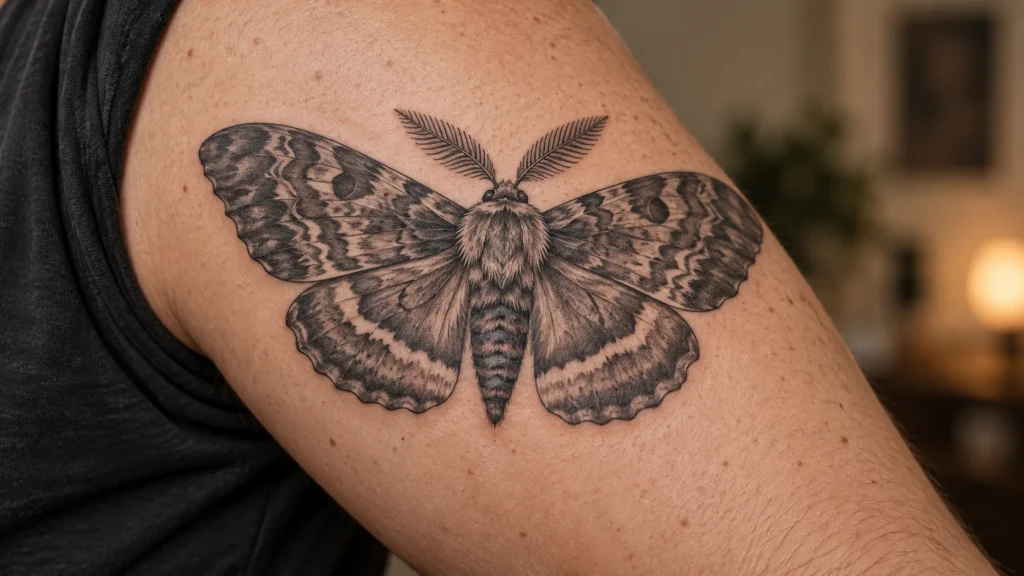
A moth tattoo can feel delicate, dramatic, or quietly strange. Long luna moth tails create a flowing shape, a dark death’s-head design brings a stronger focal point, and a small outline leaves room for the skin around it. Choosing between them starts with the silhouette: the same placement can look completely different when the wings, shading, and surrounding details change.
These 36 designs explore six directions, with six variations in each. Look beyond the color palette and compare the shape of the wings, the spacing around the body, and the balance between fine detail and open space. Use the ideas to build a brief for your tattoo artist, who can redraw the design for your placement and preferred size.
Moth tattoo meaning: what can it represent?
There is no single fixed moth tattoo meaning. You might choose one to represent change, quiet persistence, an attraction to the unknown, or simply a fascination with the insect’s patterns. Those are possible personal readings, not a universal code that every moth tattoo carries.
Transformation has a clear connection to the animal’s life cycle: moths pass through egg, larva, pupa, and adult stages. The Florida Museum describes this process as complete metamorphosis. Turning that biological change into a symbol of starting again is an interpretation you can make your own.
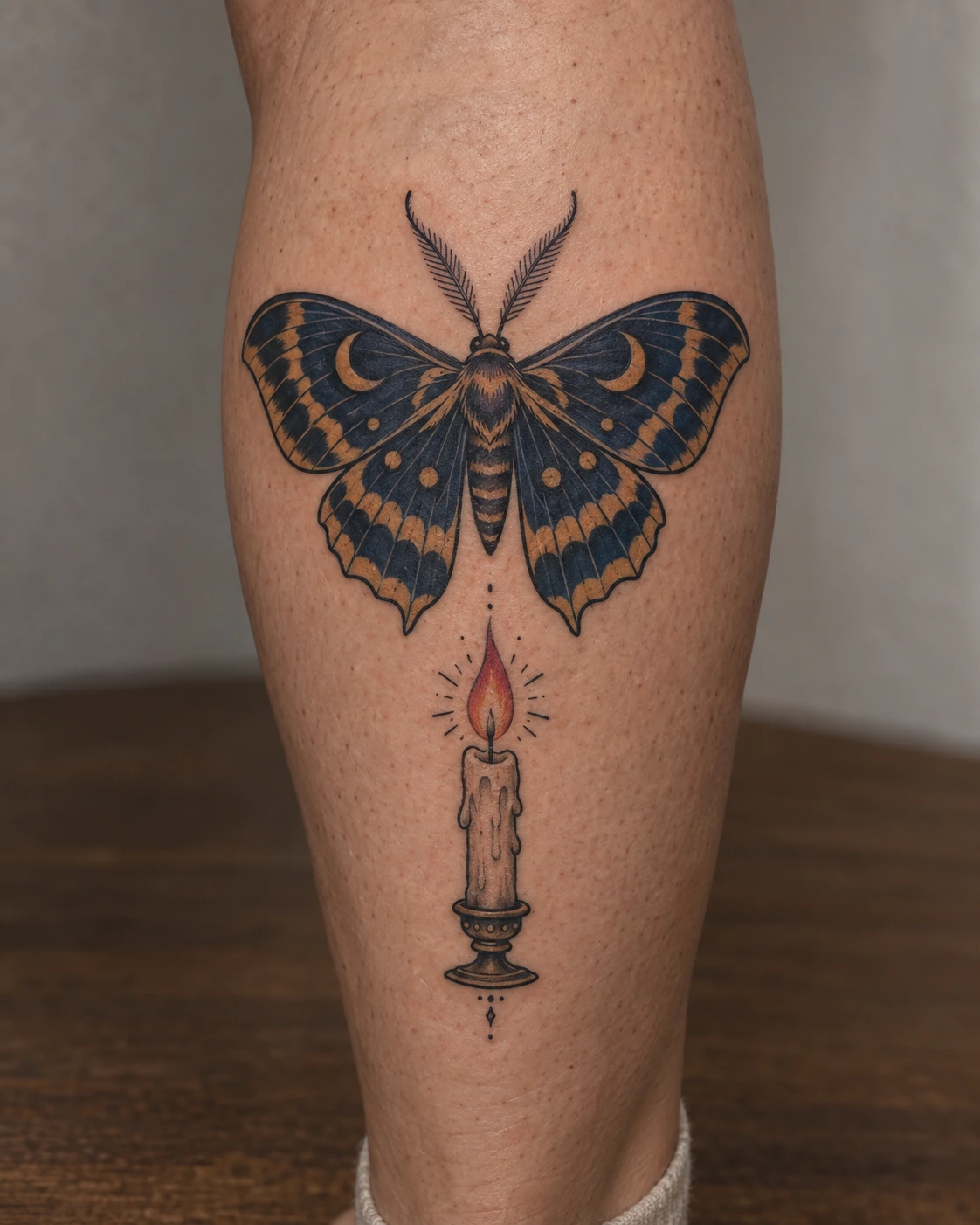
A moon can add a feeling of night and reflection; a flower can make the composition feel softer or mark something personal. A candle may suggest guidance, longing, or the pull of something risky. Decide which association matters to you before adding symbols, so the finished piece has a clear focus.
Luna moth tattoo ideas
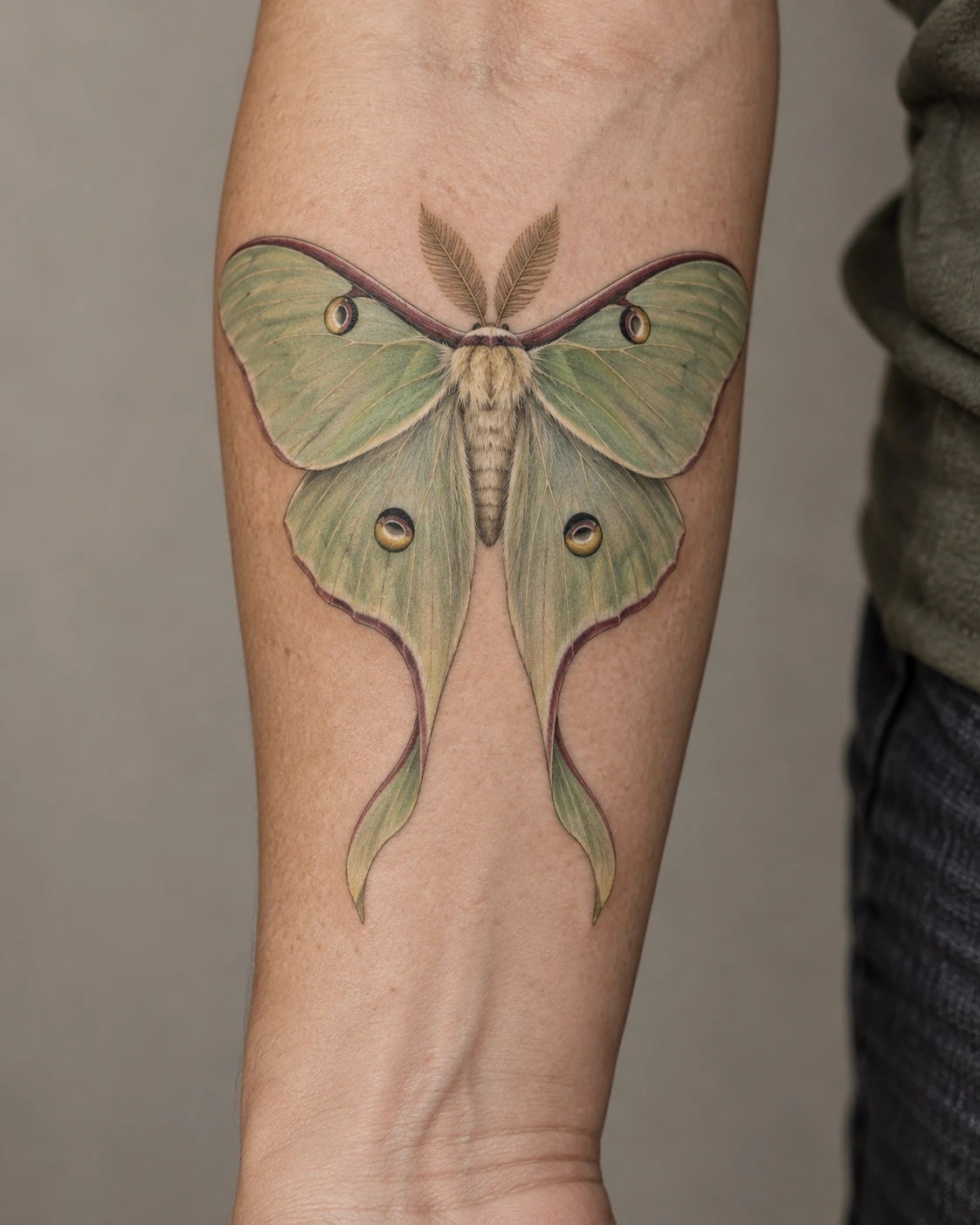
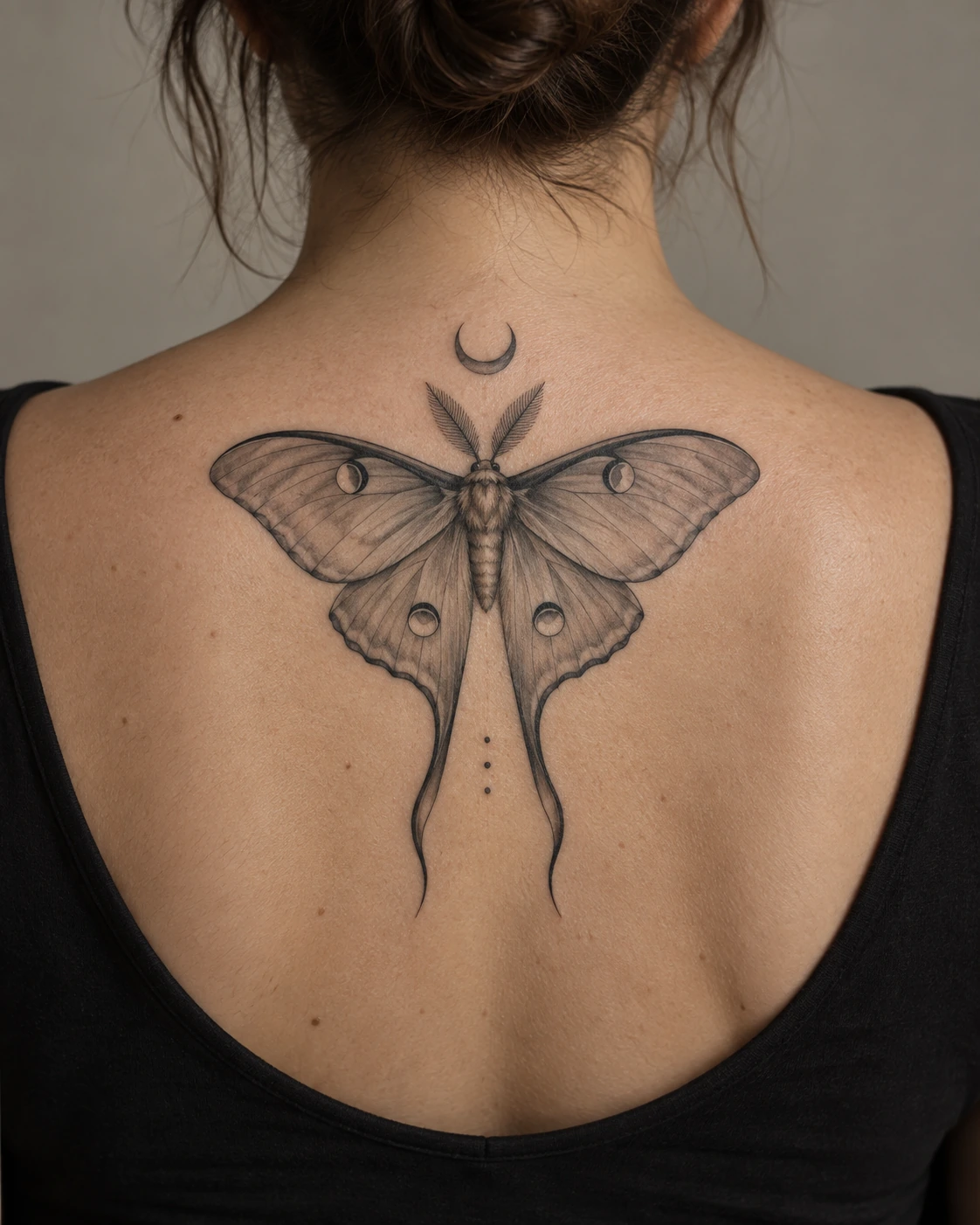
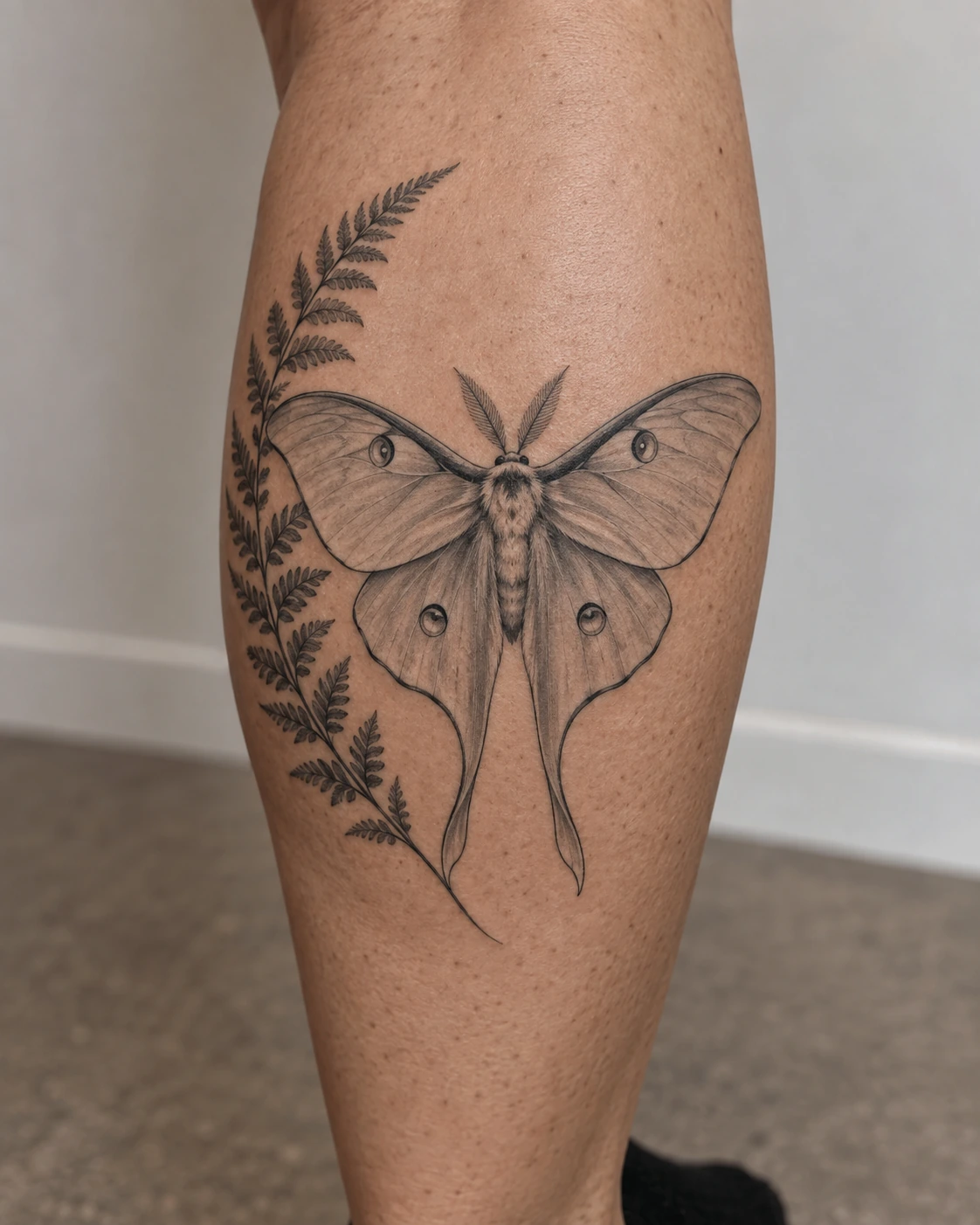
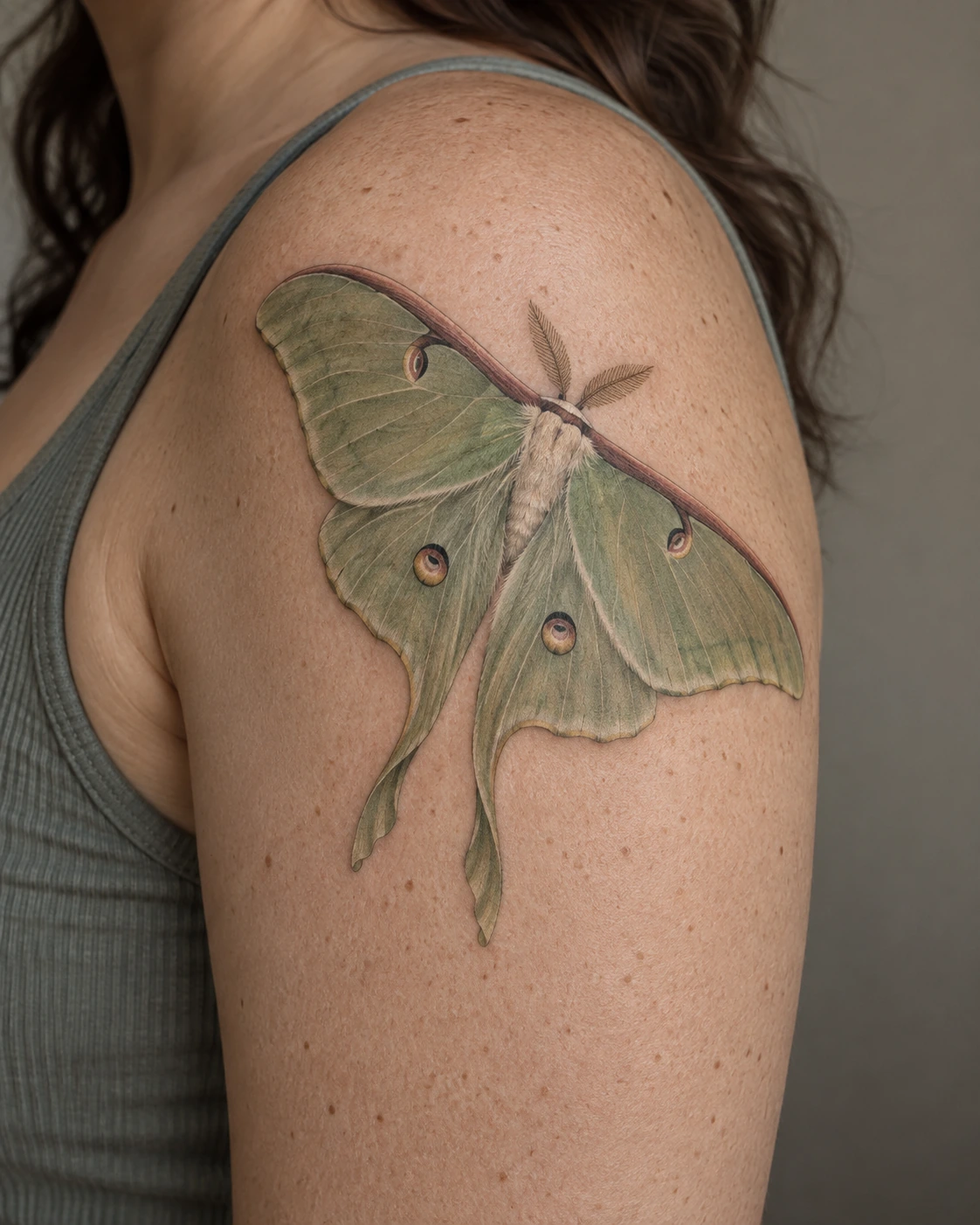
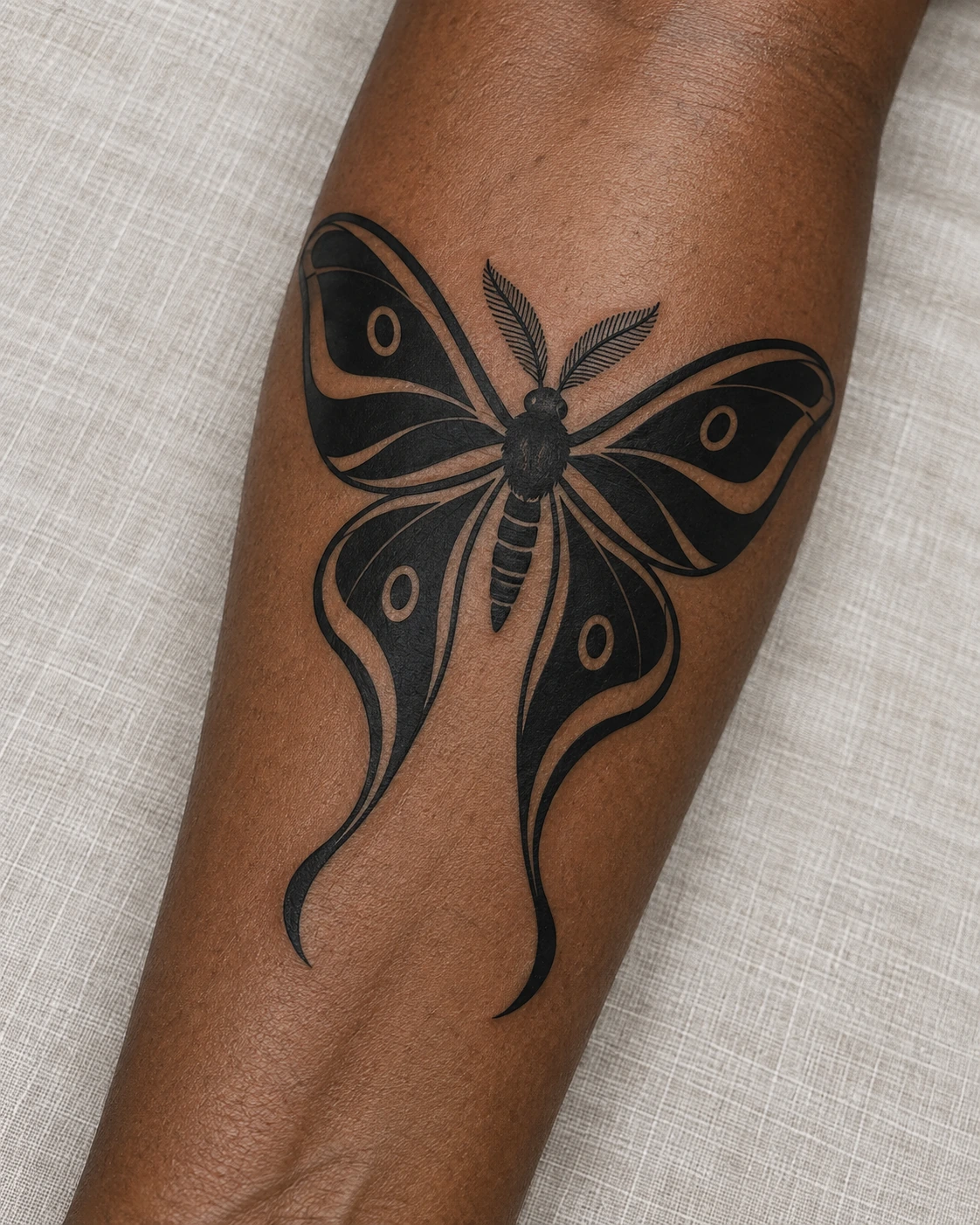
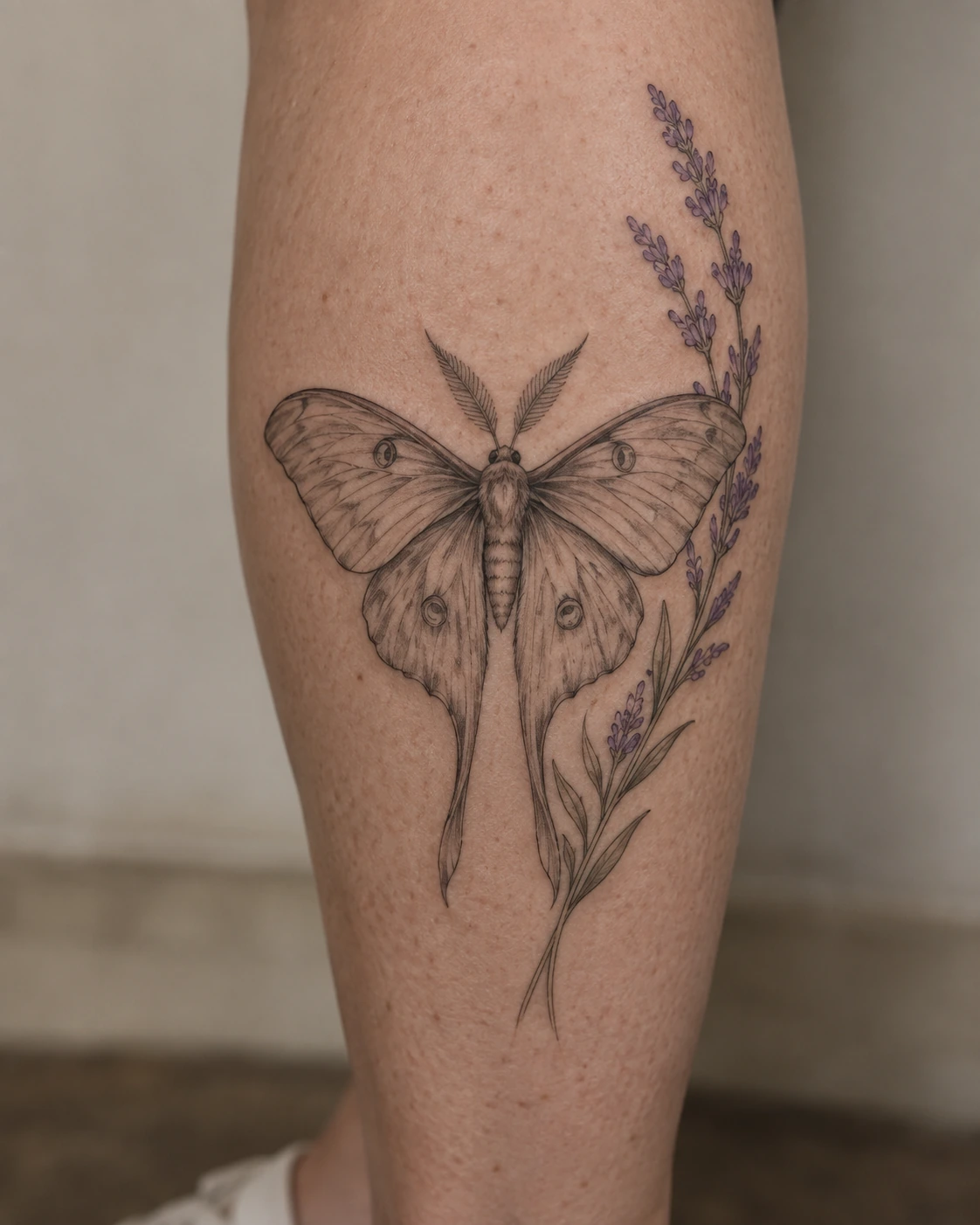
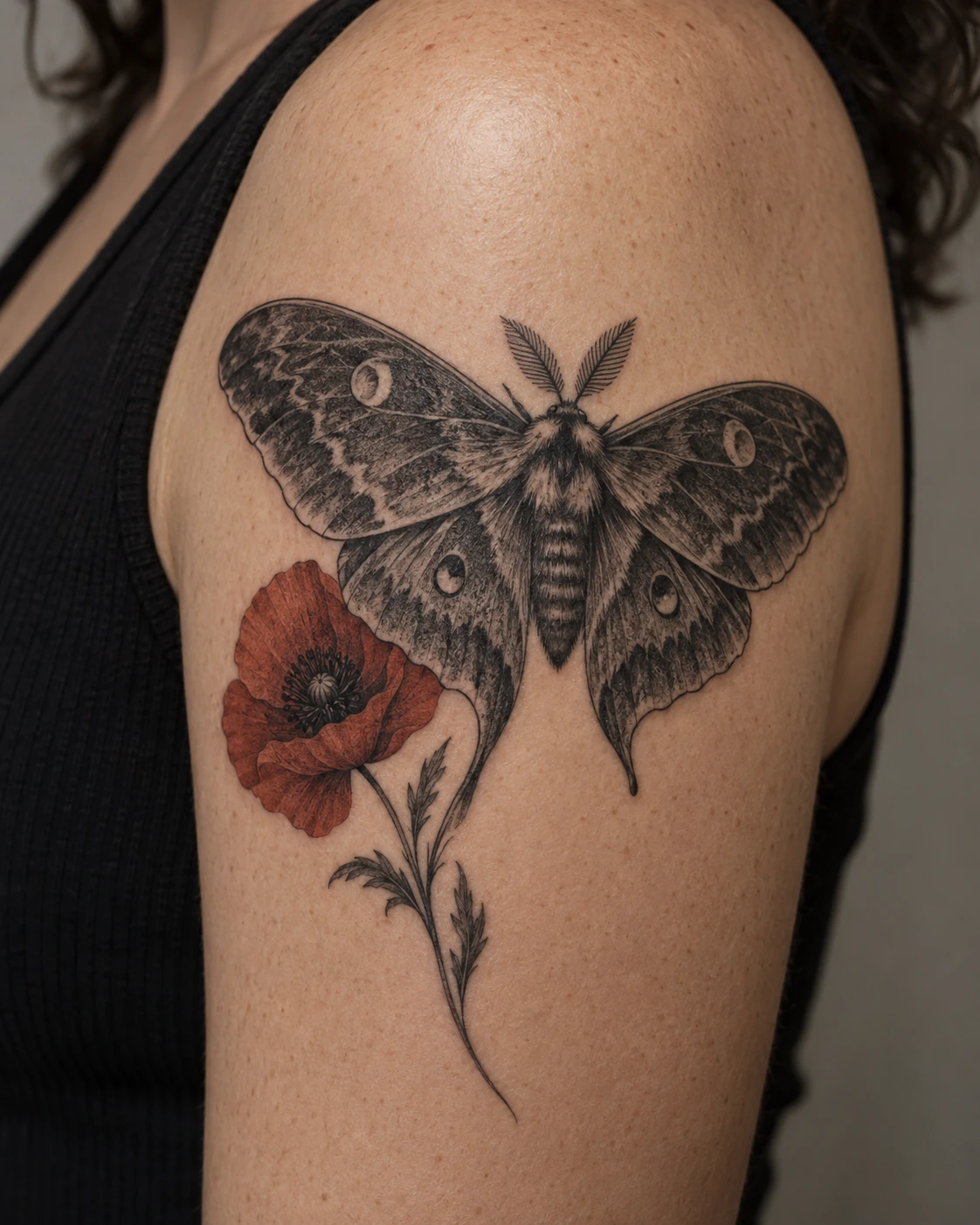
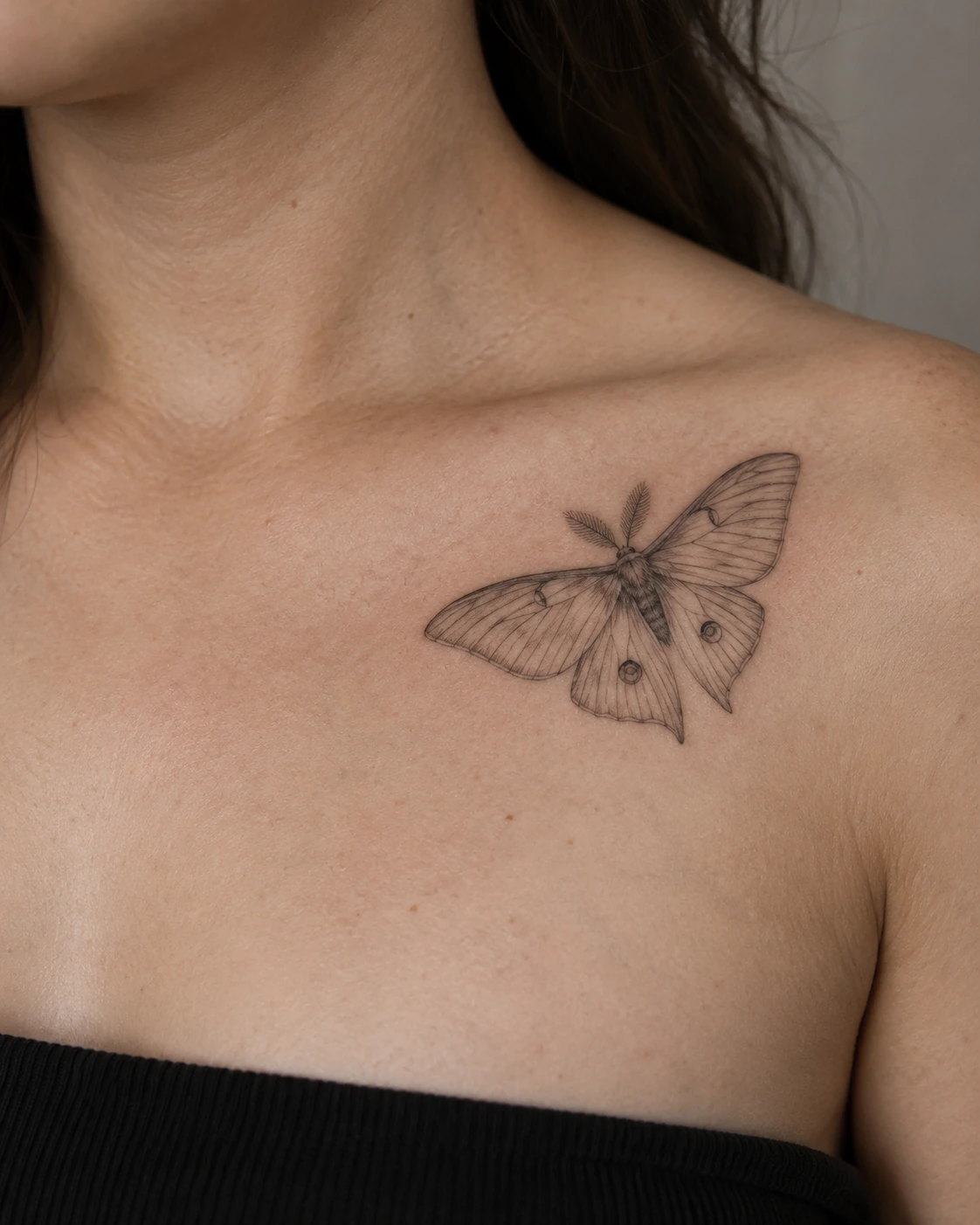
A luna moth tattoo is built around a distinctive flowing outline. The long extensions belong to the hindwings, so they should read as part of the wings rather than extra limbs or a tail attached to the abdomen. The pale green design emphasizes natural color, while gray shading and botanical details offer quieter alternatives. The bold blackwork version takes the same long-tailed structure in a different direction, using solid panels and open skin instead of soft shading.
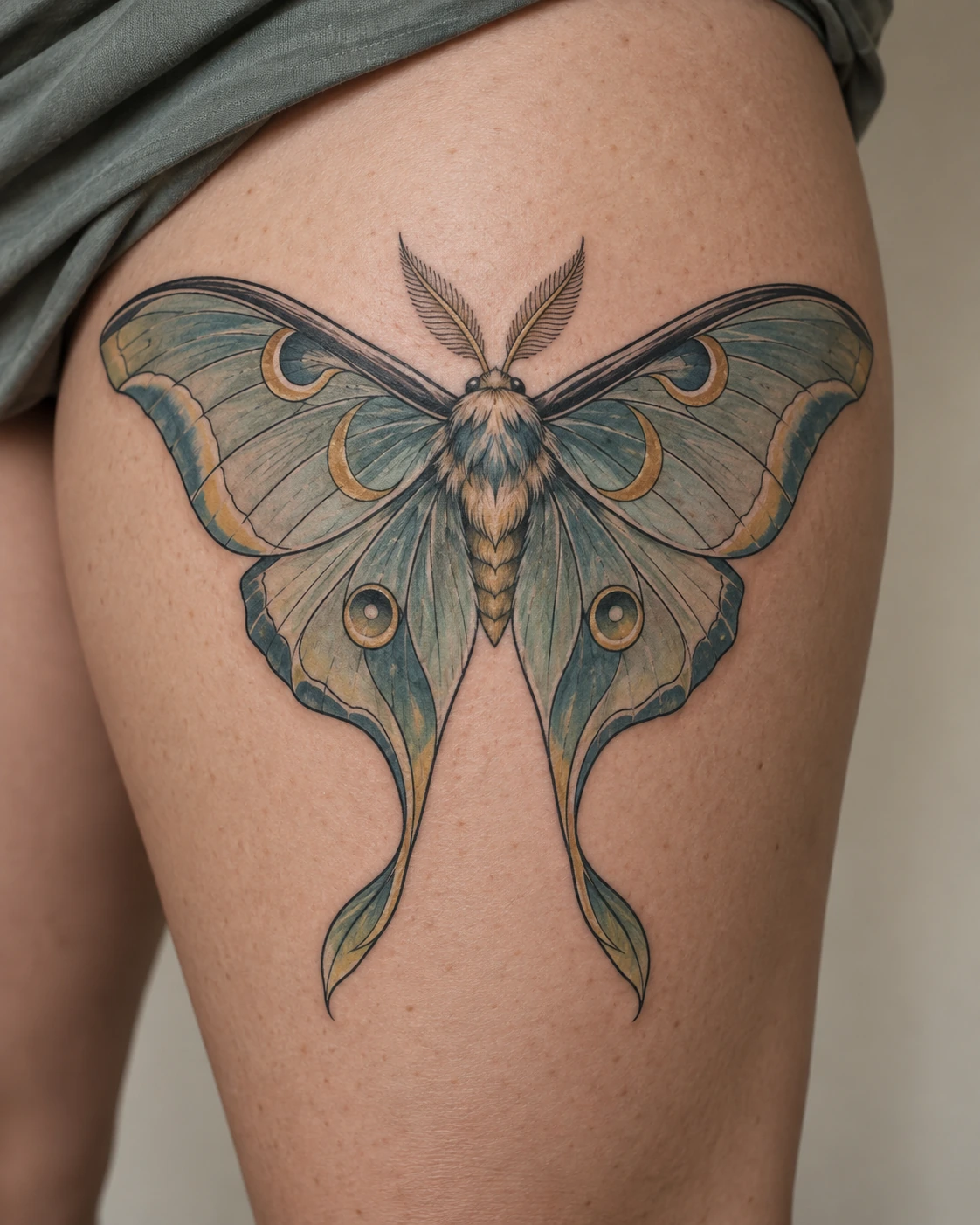
For a luna moth tattoo meaning, renewal or a new phase can be a personal starting point. A lunar moth tattoo can also describe a moon-themed composition; adding a crescent is a design choice, not a requirement. The blue version here deliberately takes an artistic color direction rather than presenting a natural-color specimen.
Death moth and skull moth tattoo ideas
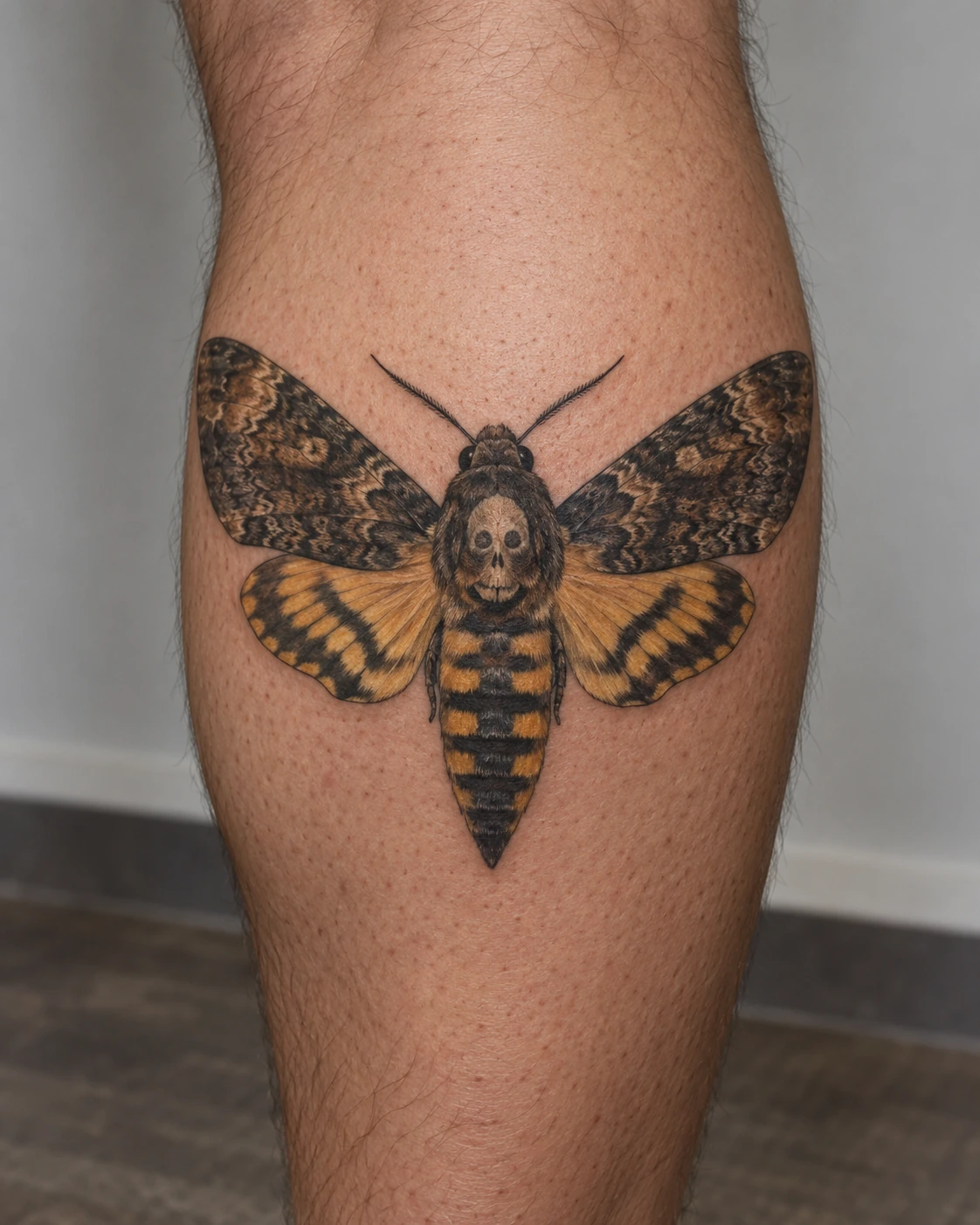
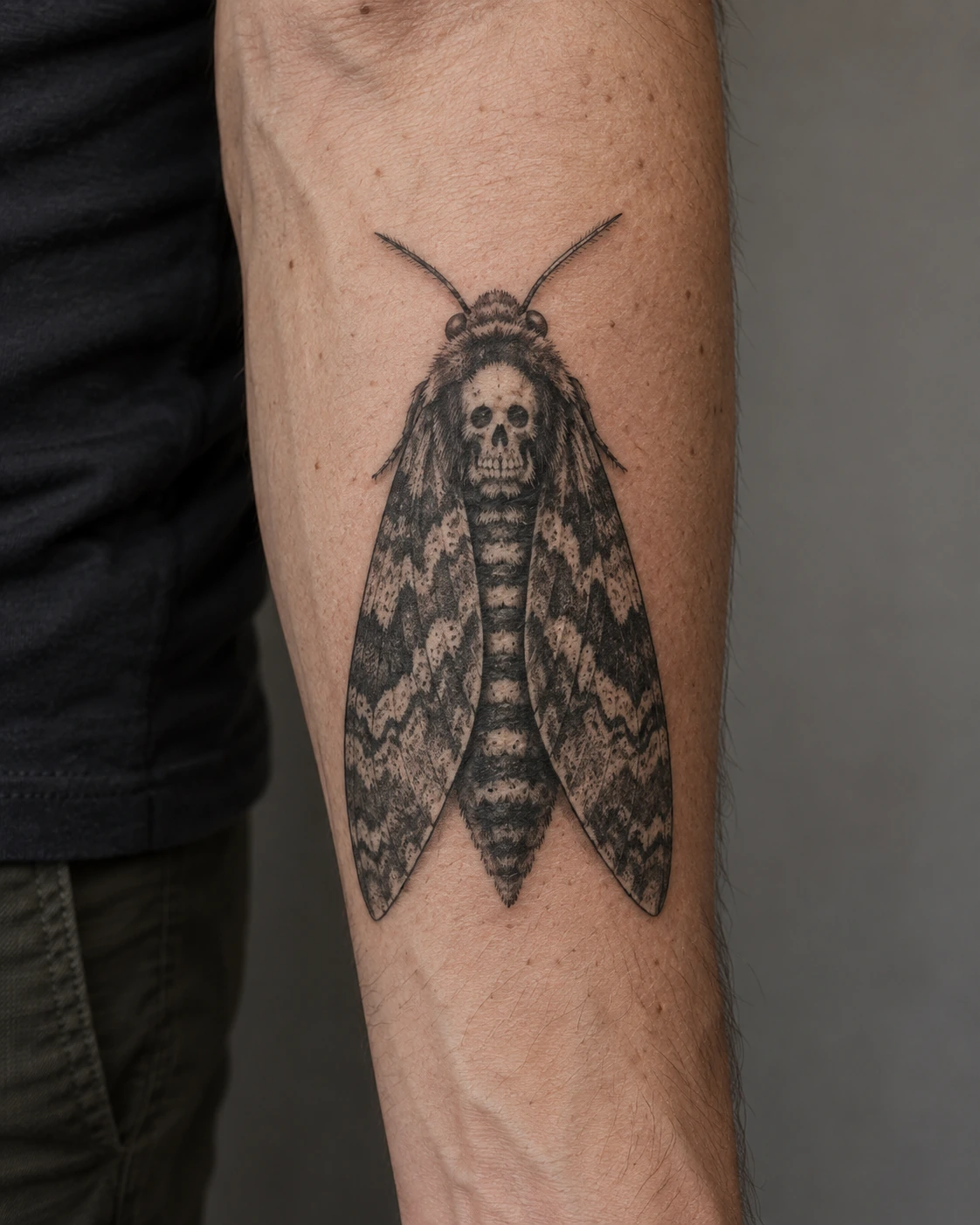
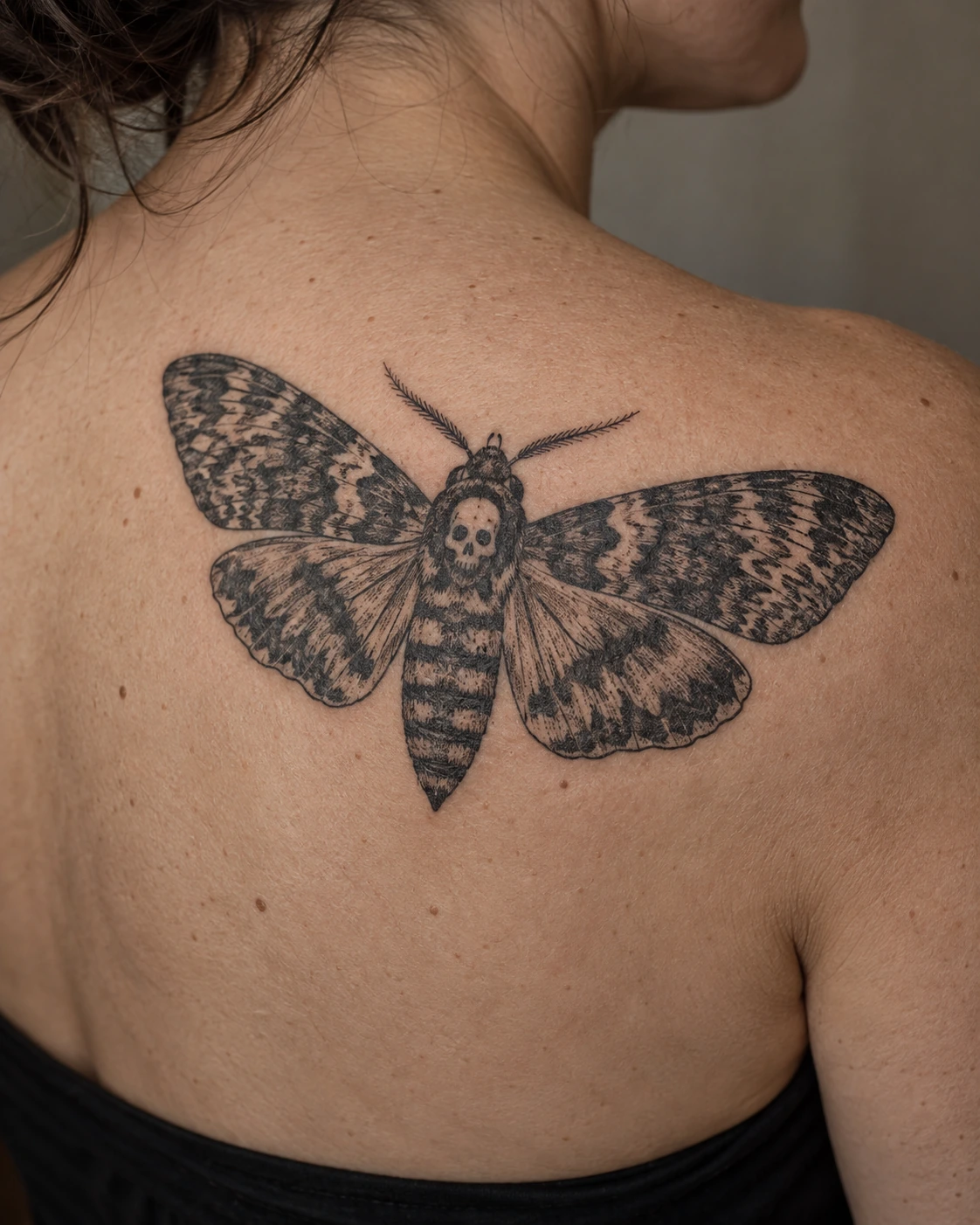
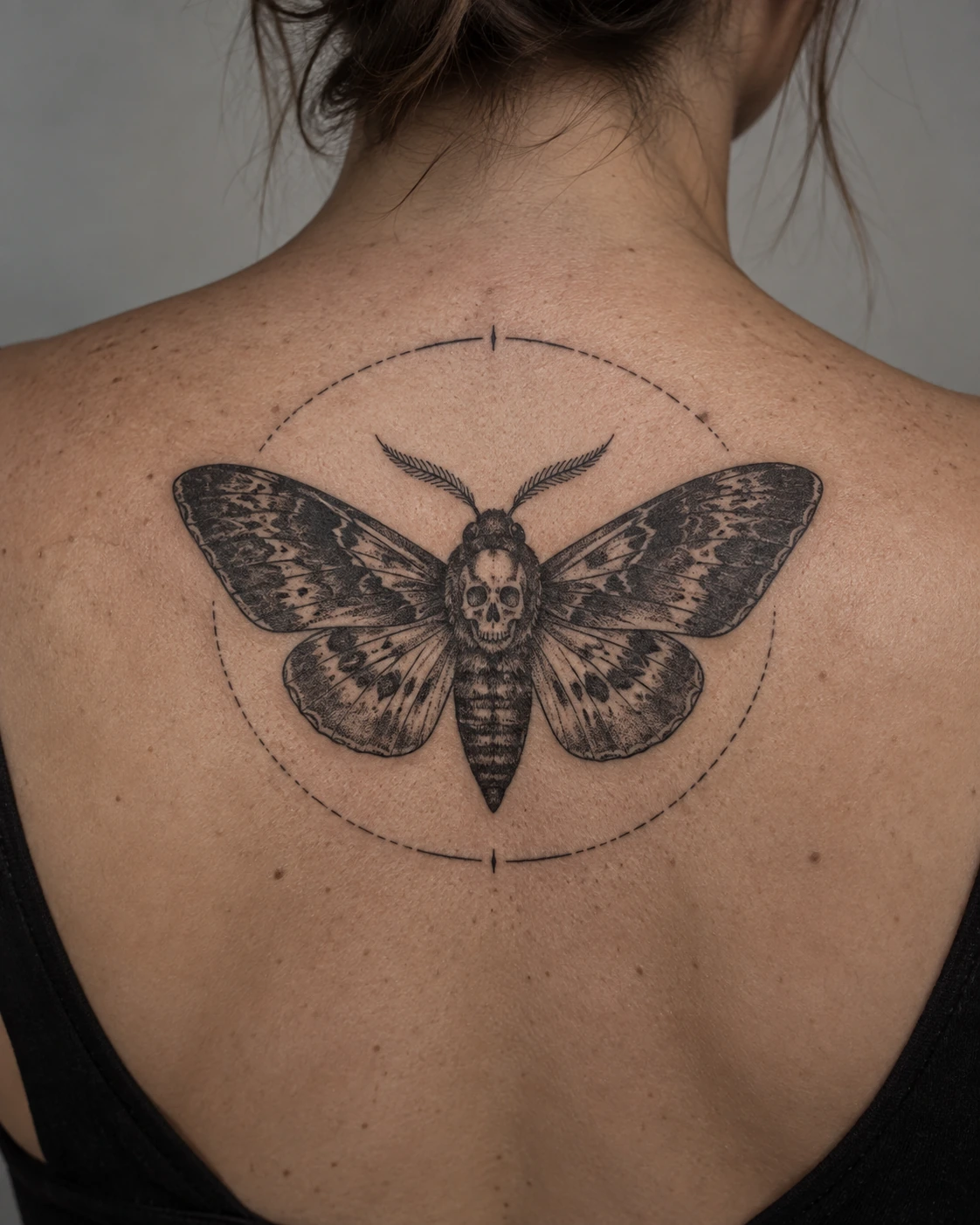
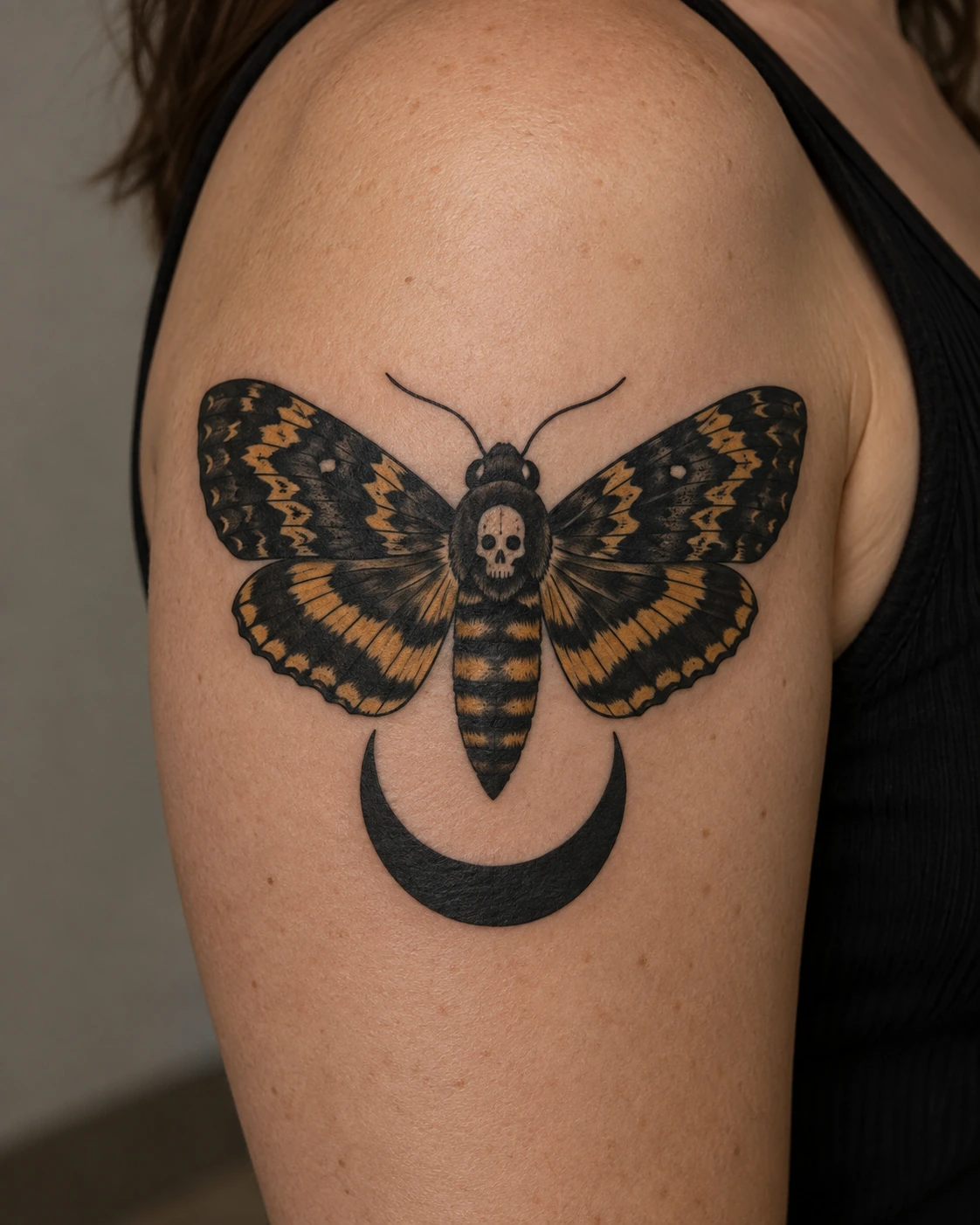
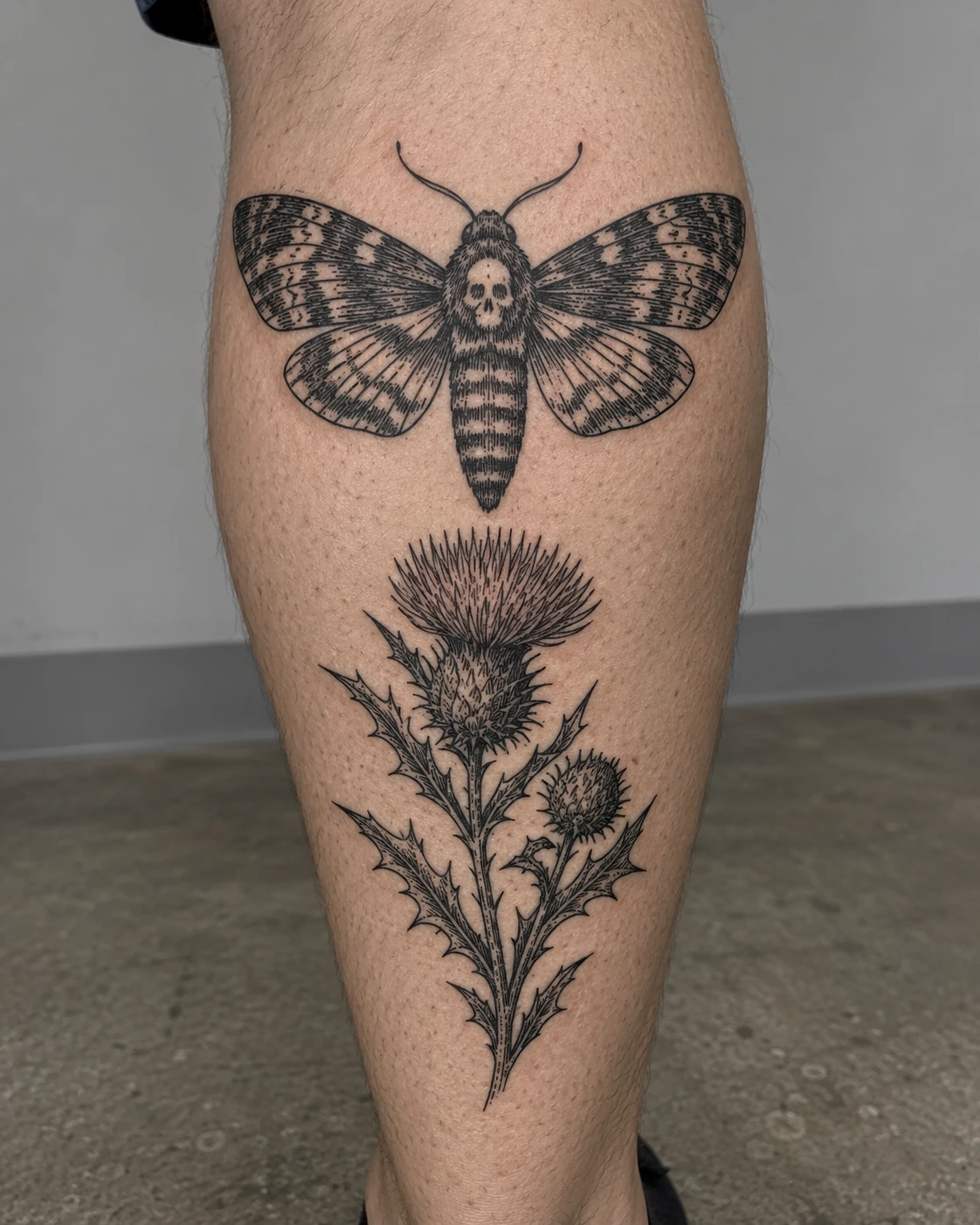
A death moth tattoo gives the center of the design more visual weight. In these concepts, the skull motif sits within the thorax area, while the head, antennae, abdomen, and wings remain separately readable. Some versions use subtle shading; others make the skull more explicit as a decorative tattoo motif. The thistle composition adds a woodcut-inspired treatment, with short hatch marks and a separate botanical element below the moth.
A death moth tattoo meaning might involve mortality, remembrance, or accepting change. It does not automatically mean bad luck or grief. If you prefer a skull moth tattoo mainly for its visual impact, that is enough. Compare the long resting-wing design with the broader open-wing versions before choosing a body placement.
Traditional and colorful moth tattoos
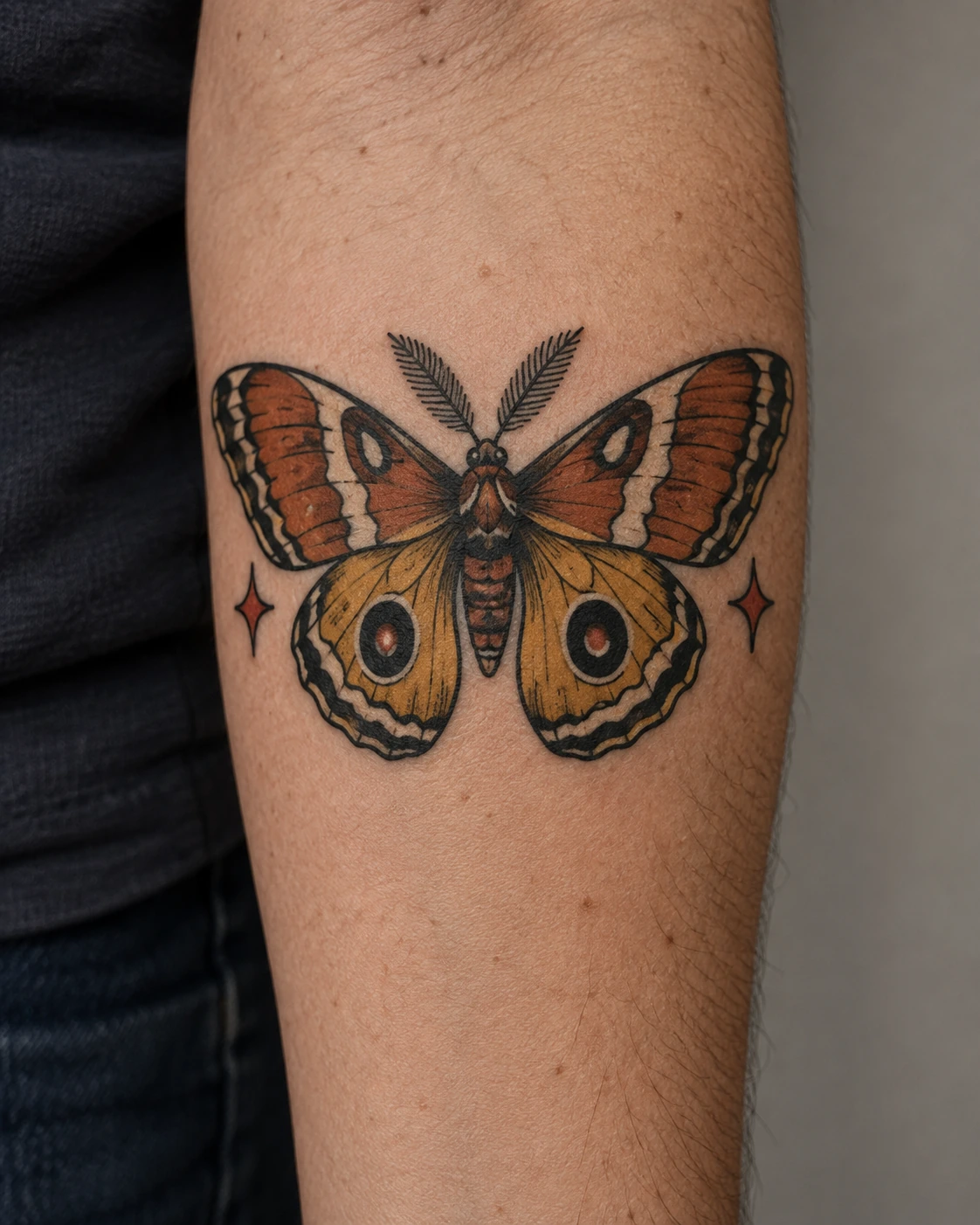
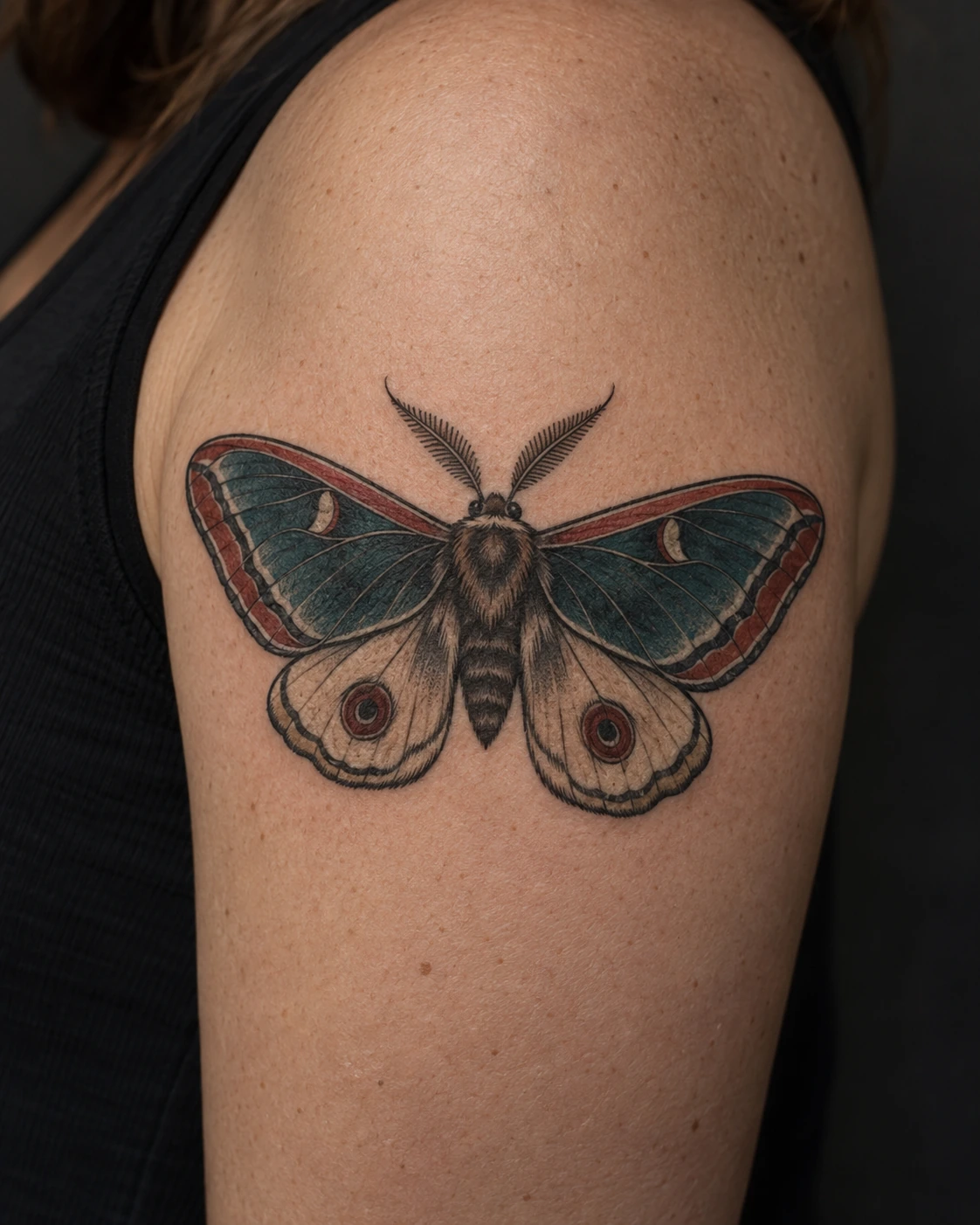
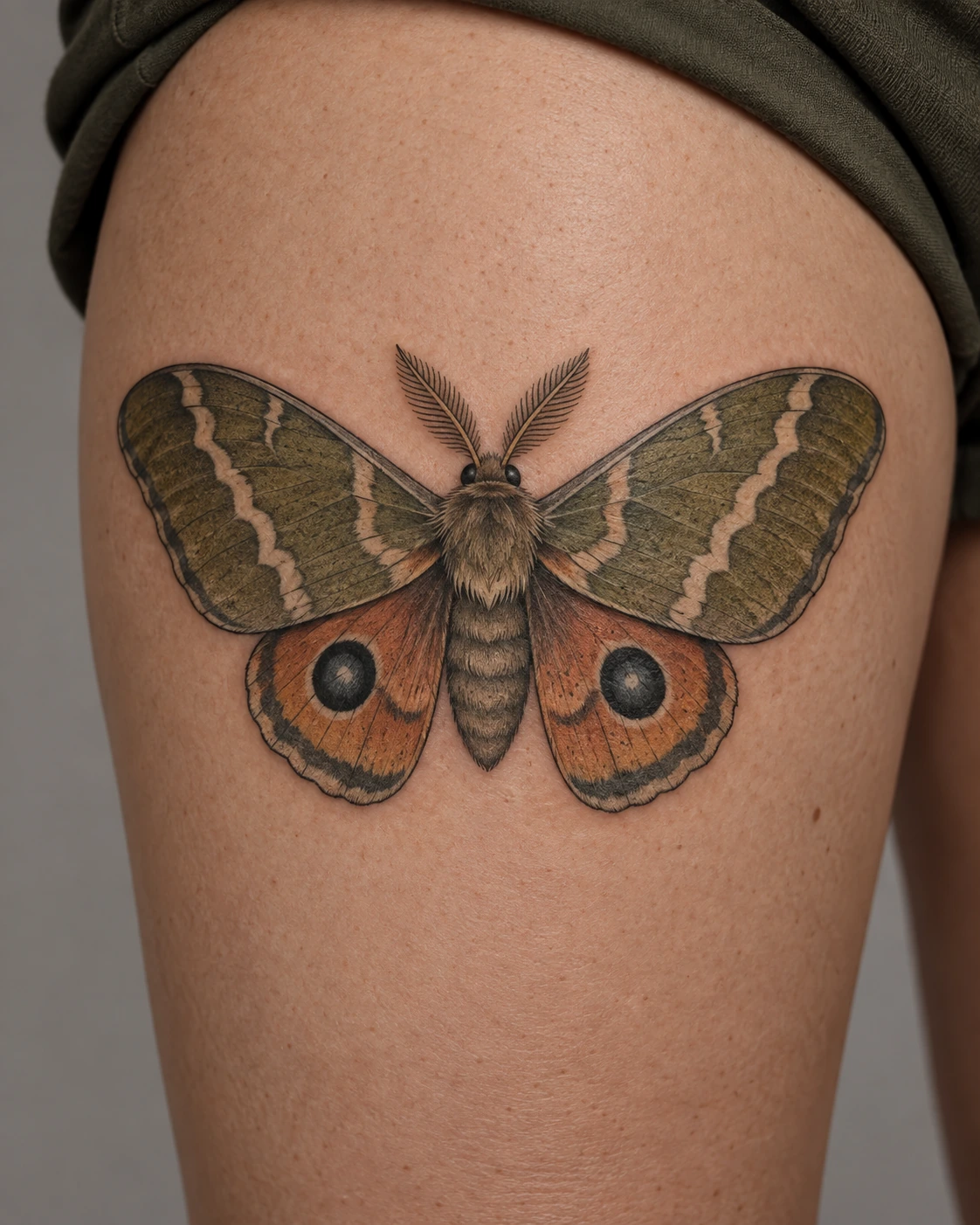
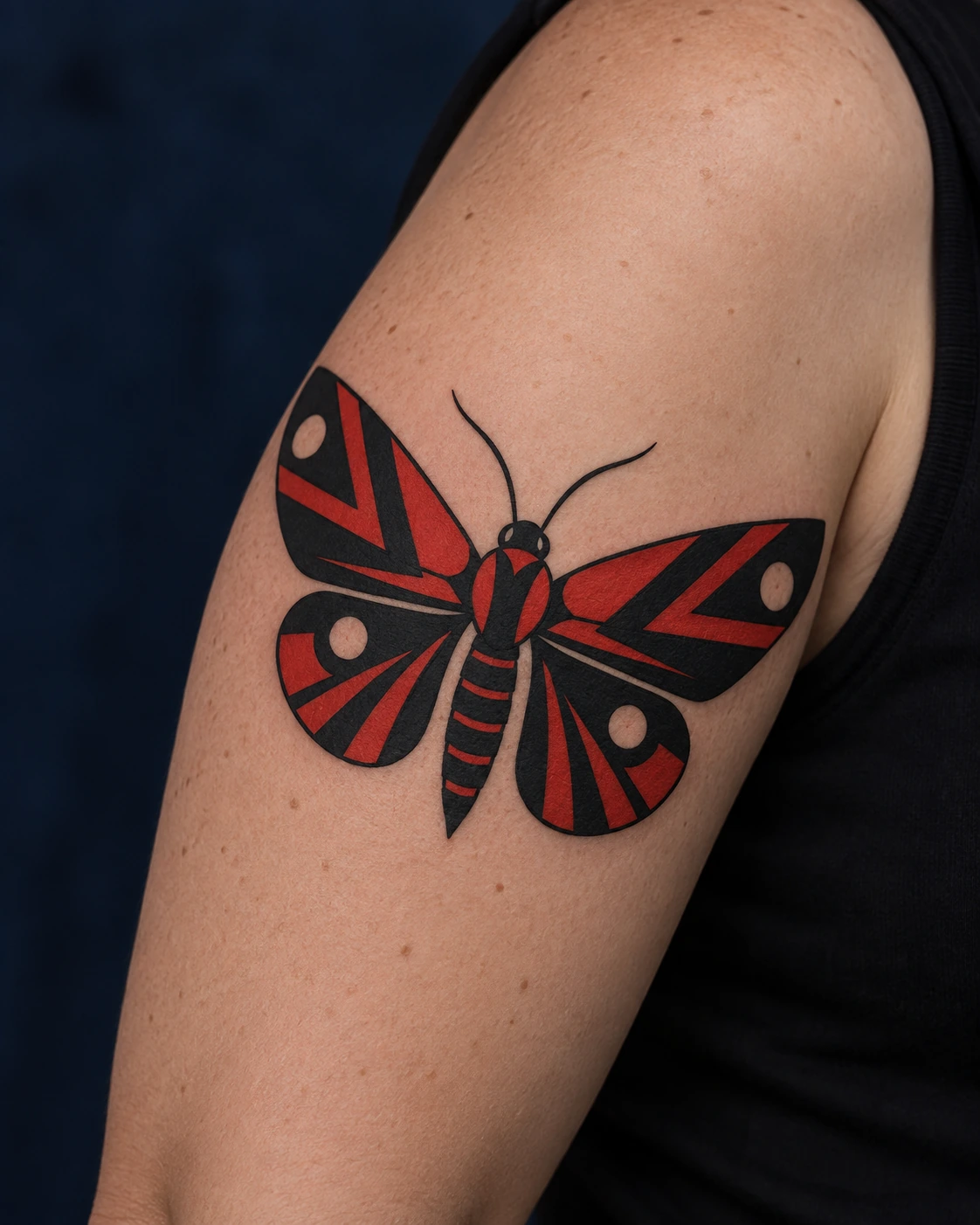
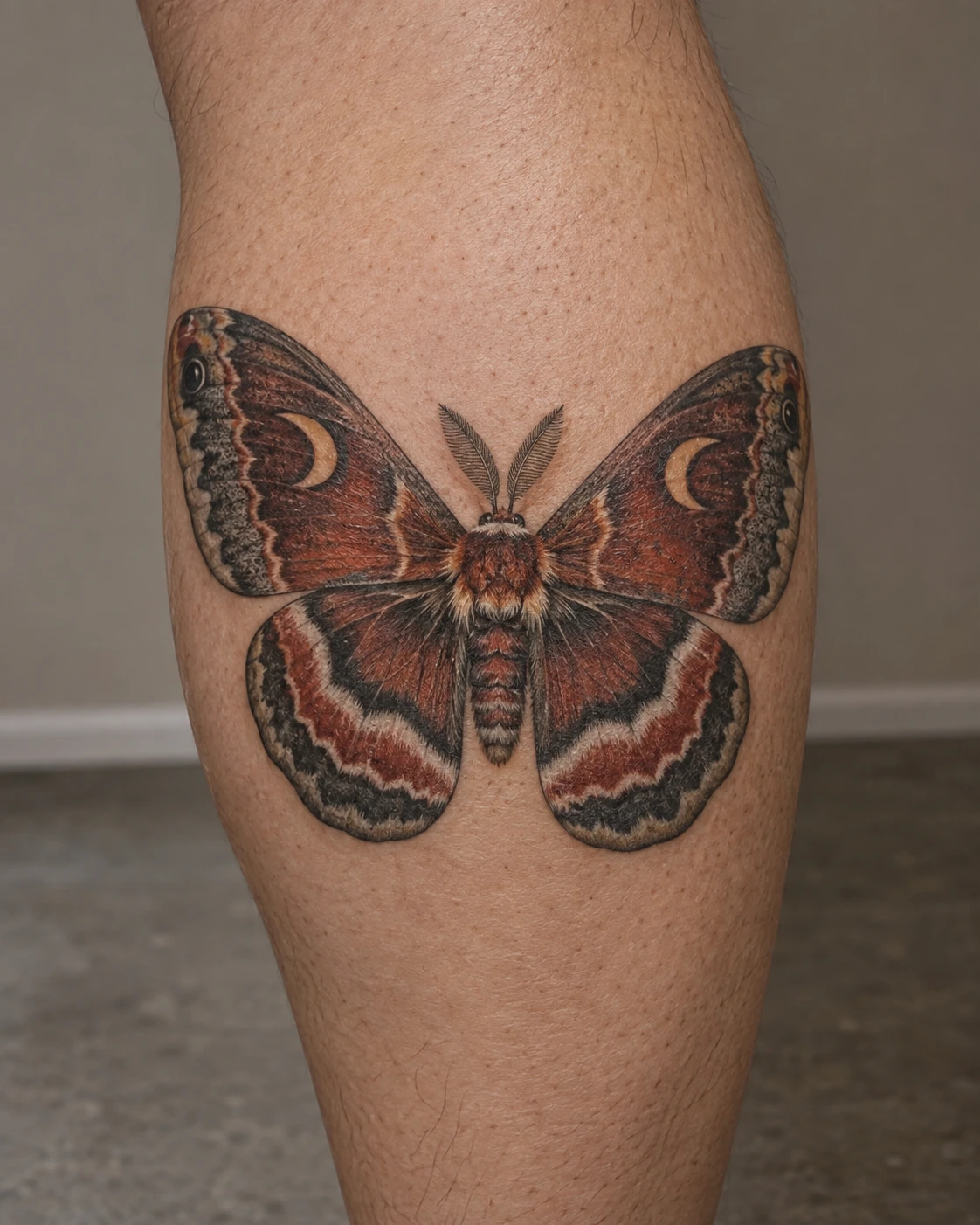
A traditional moth tattoo uses a strong outline and clear blocks of color to make the insect readable at a glance. Rust, gold, black, and cream create a different mood from a teal-and-red palette. More layered shading and ornamental wing patterns move some of these examples toward a neo-traditional approach. The red-and-black graphic version goes further toward flat shapes, using angular panels and bare-skin circles instead of blended color.
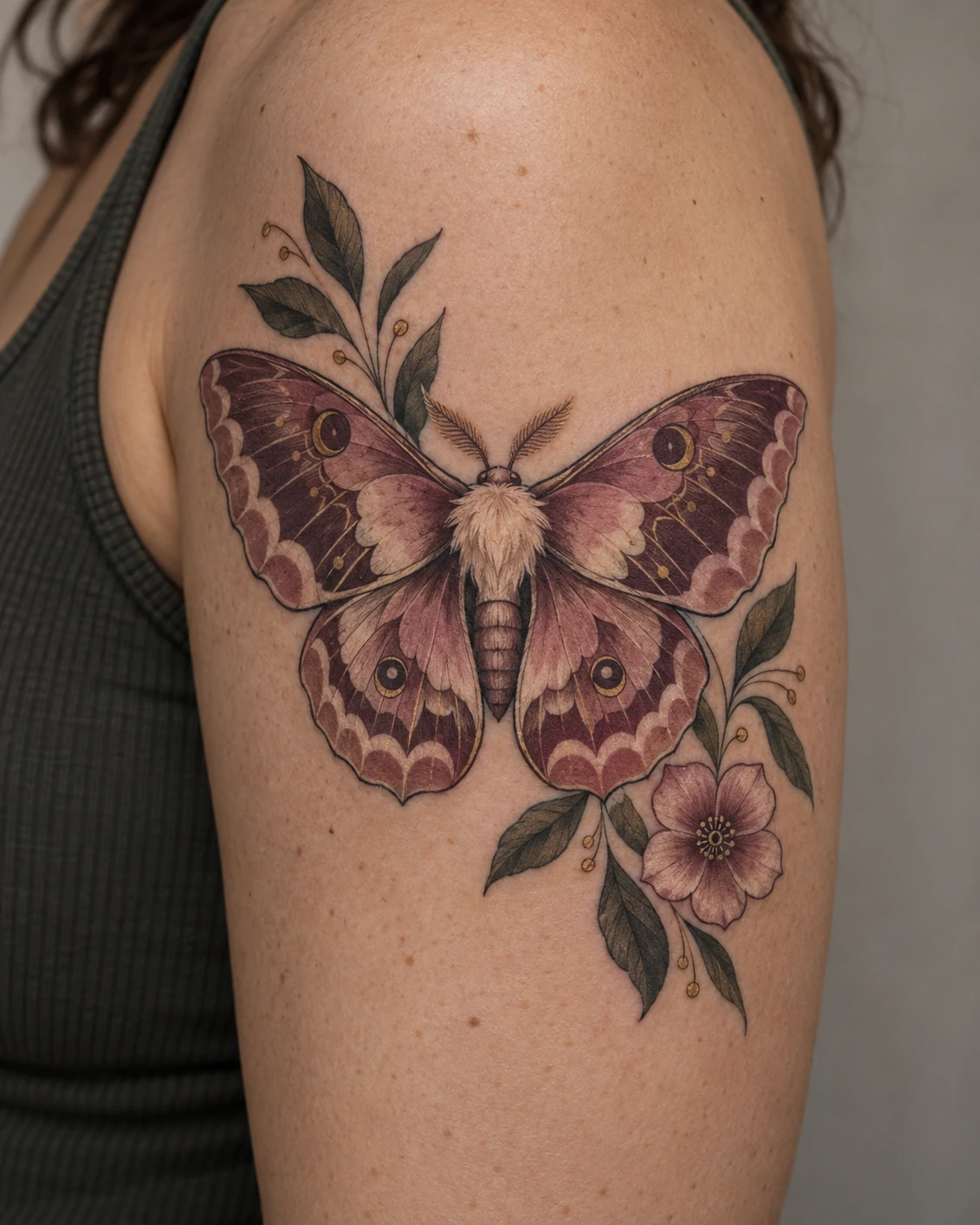
The candle design stretches the composition vertically, while the plum-colored floral version spreads it diagonally. Notice how the extra elements stay distinct from the insect. A flower stem or candle detail should never accidentally become an antenna or a leg simply because two lines meet.
Realistic moth tattoo designs
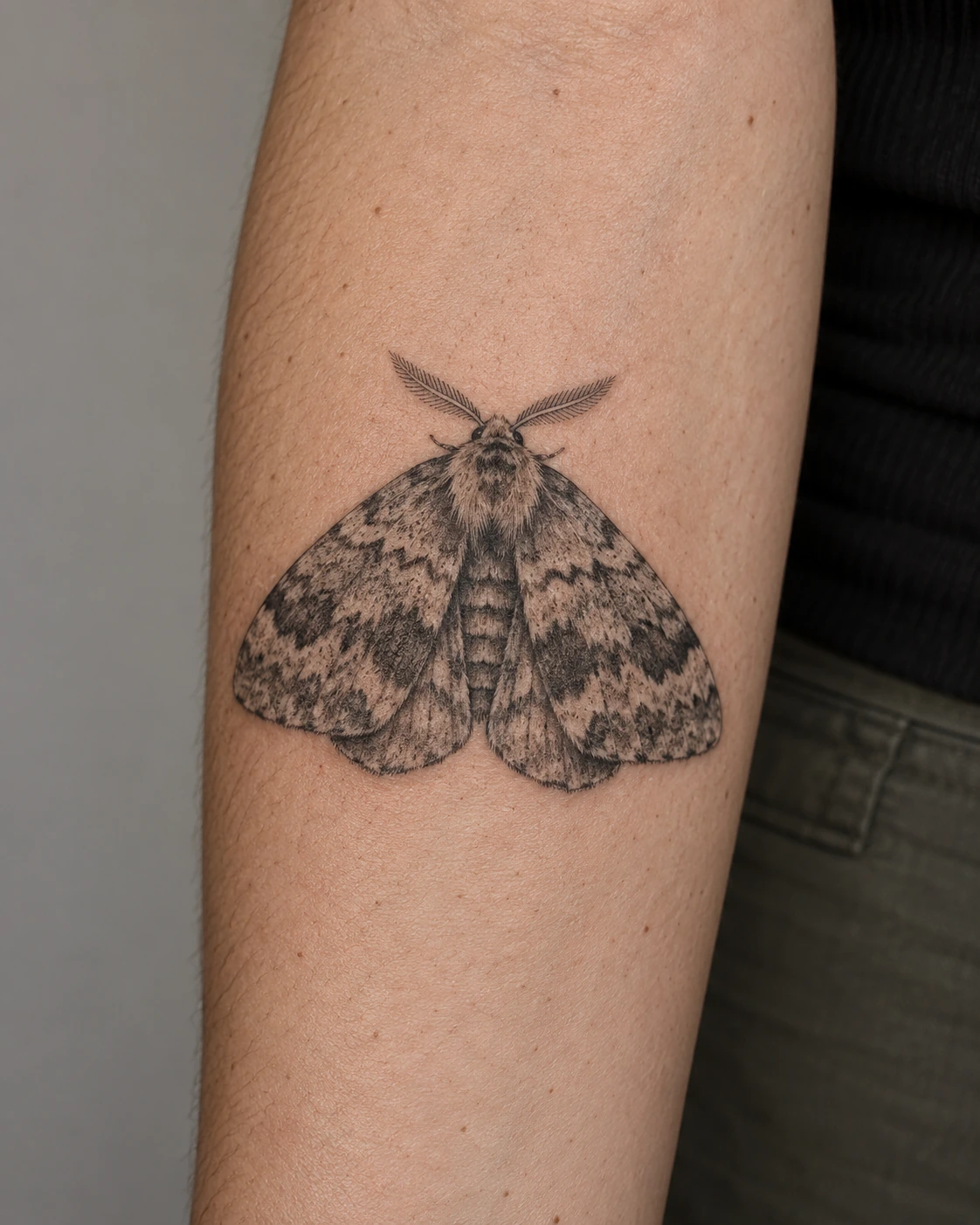
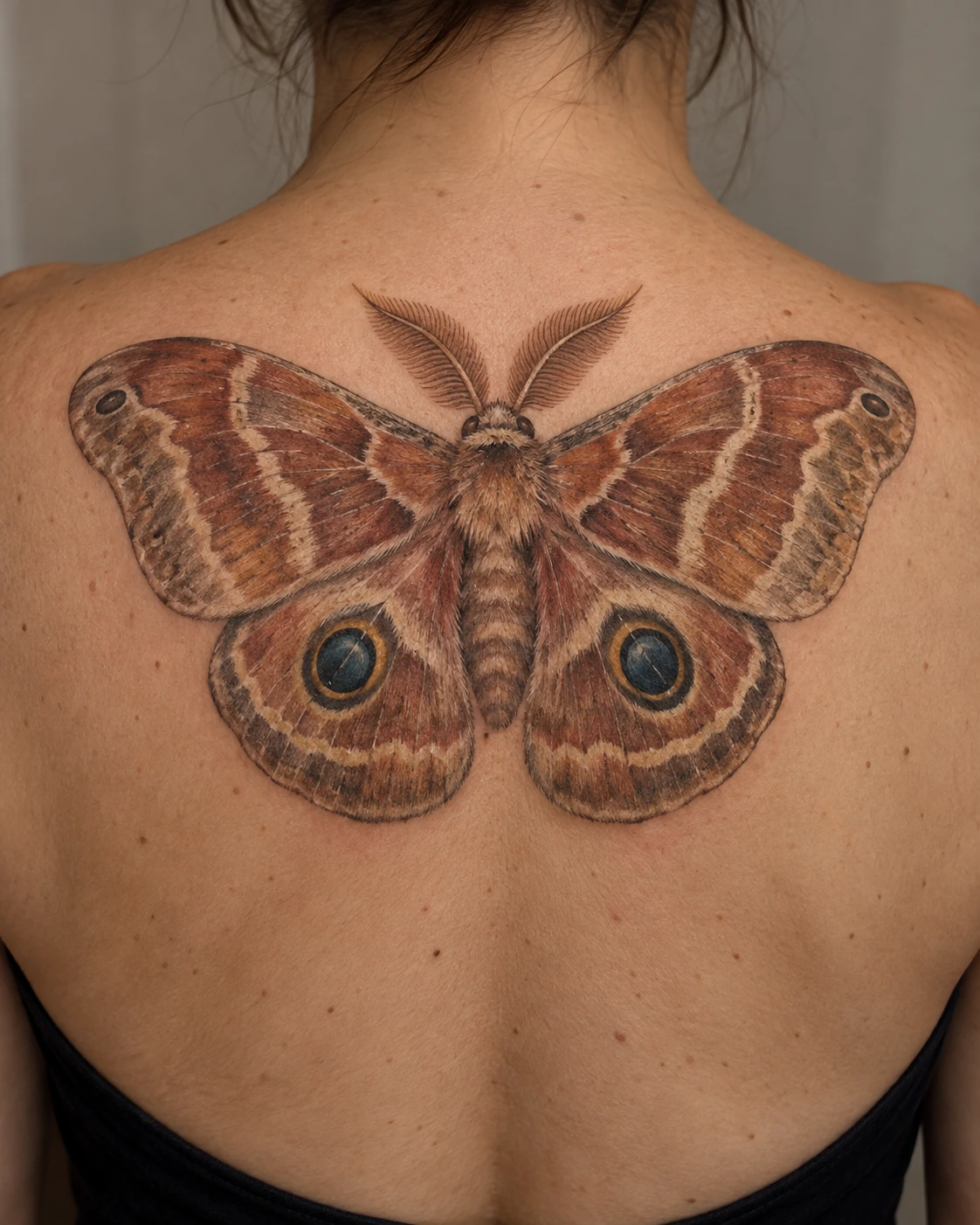
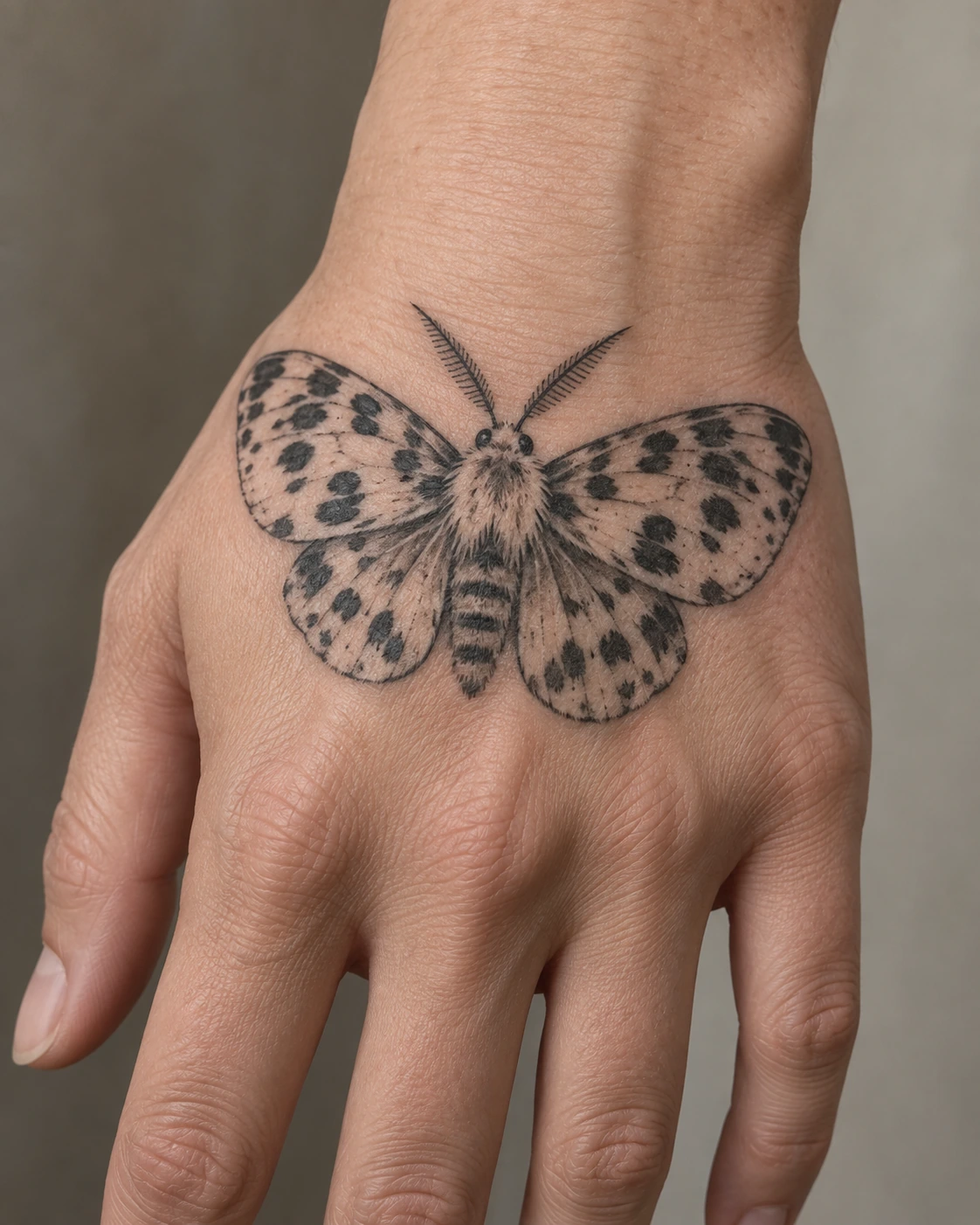
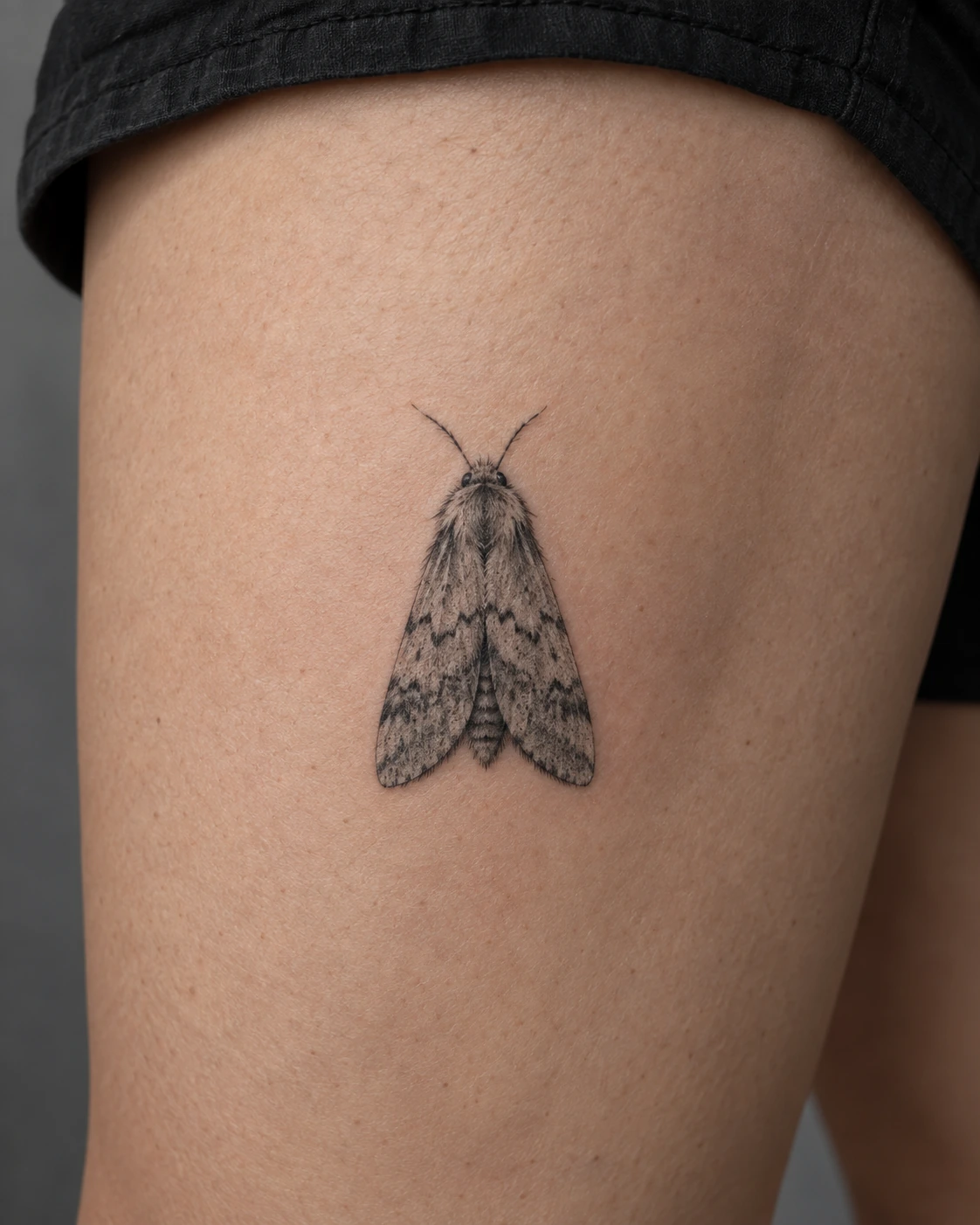
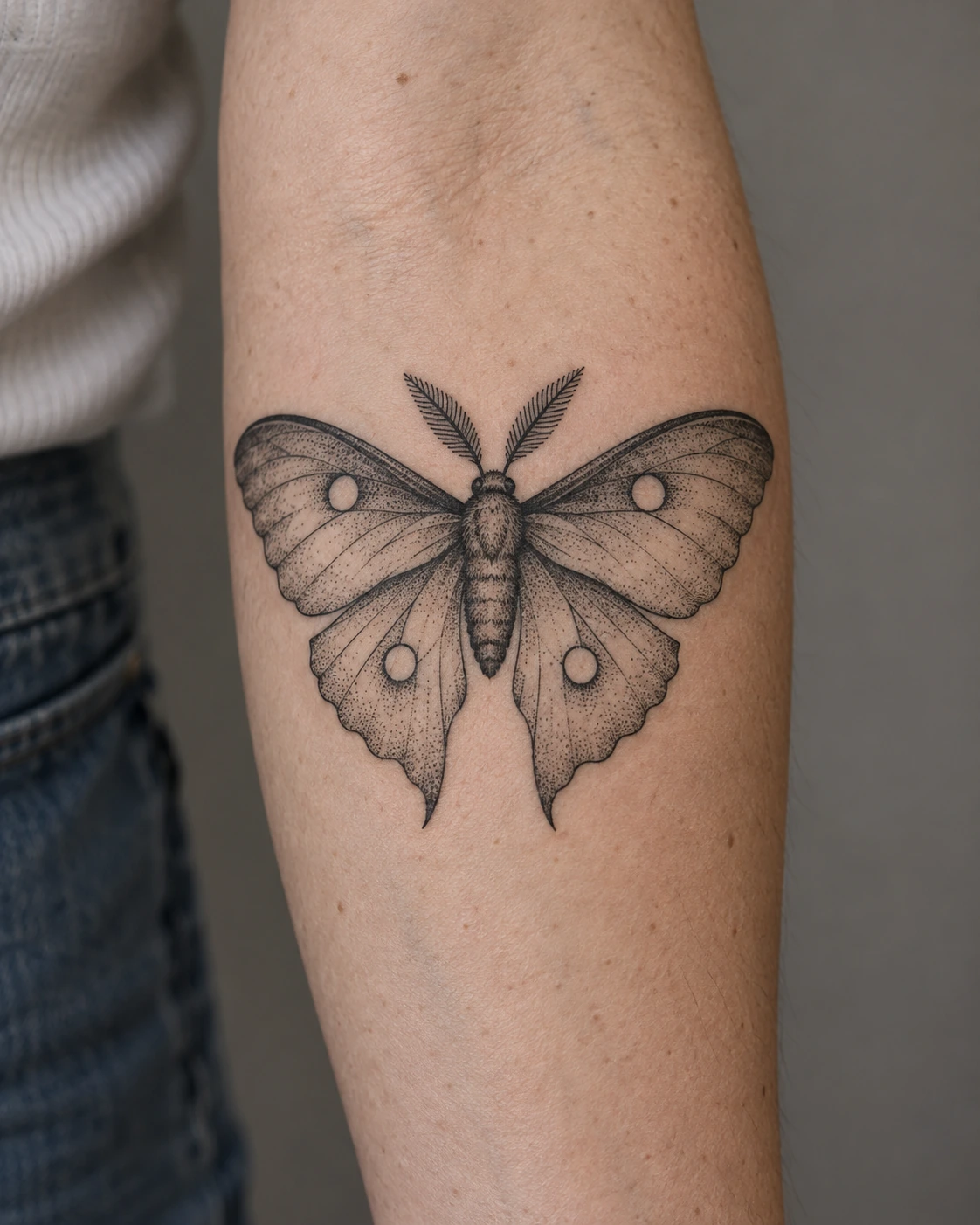
A realistic moth tattoo depends on structure as much as texture. A fuzzy-looking thorax and intricate wing patterns cannot compensate for a misplaced wing root or a disconnected body. The naturalistic examples explore different proportions, from broad eyespot wings to a more compact resting shape. A silver-gray resting moth offers a narrower alternative: the forewings lie close over the body and conceal the hindwings.
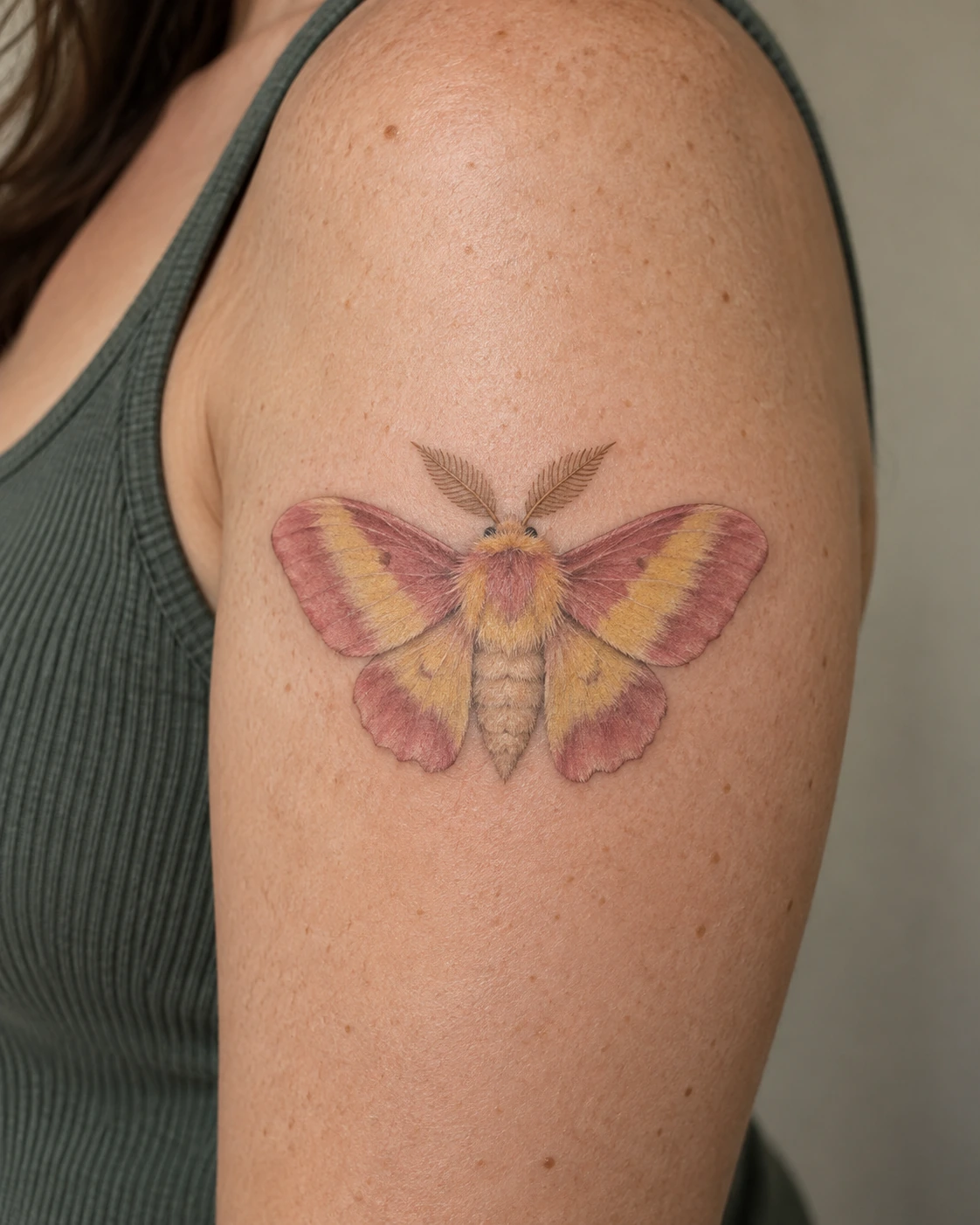
Warm brown, pink and yellow, and black-and-white markings offer variety without requiring a moon or flower around every insect. Think about which detail should remain the focal point when the design is viewed from a few steps away. Your artist can simplify tiny markings while preserving the overall character.
Moth tattoos with flowers and foliage
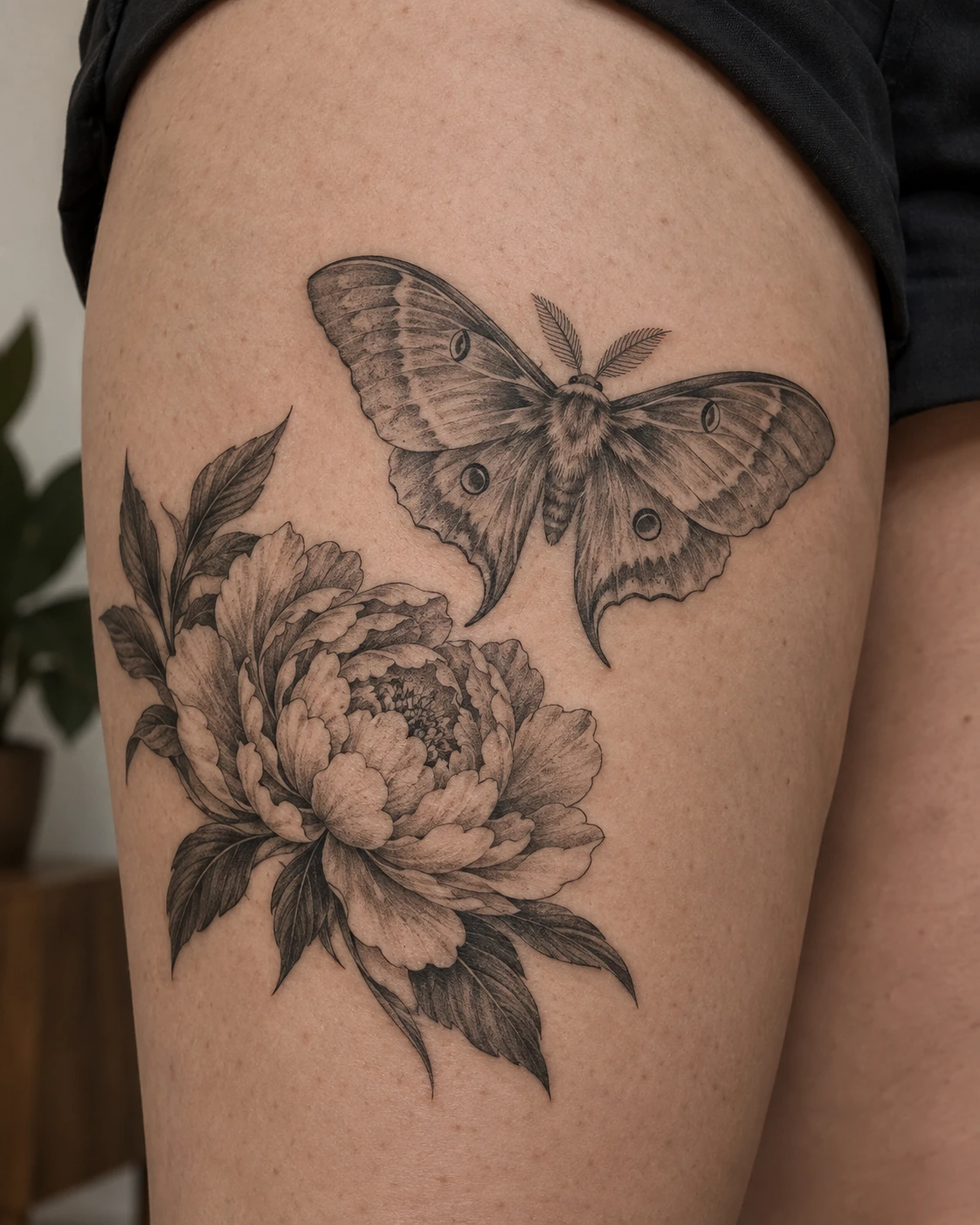
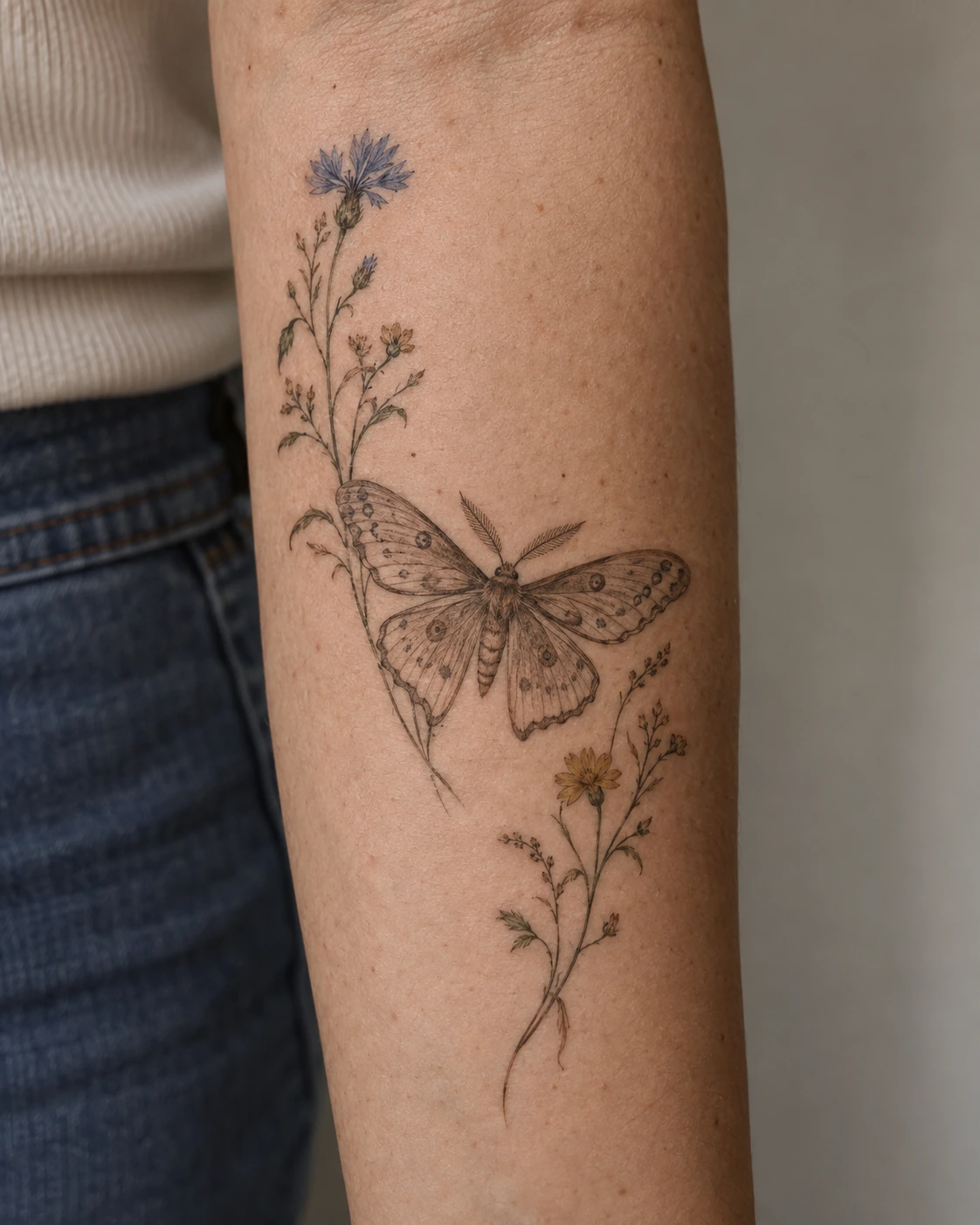
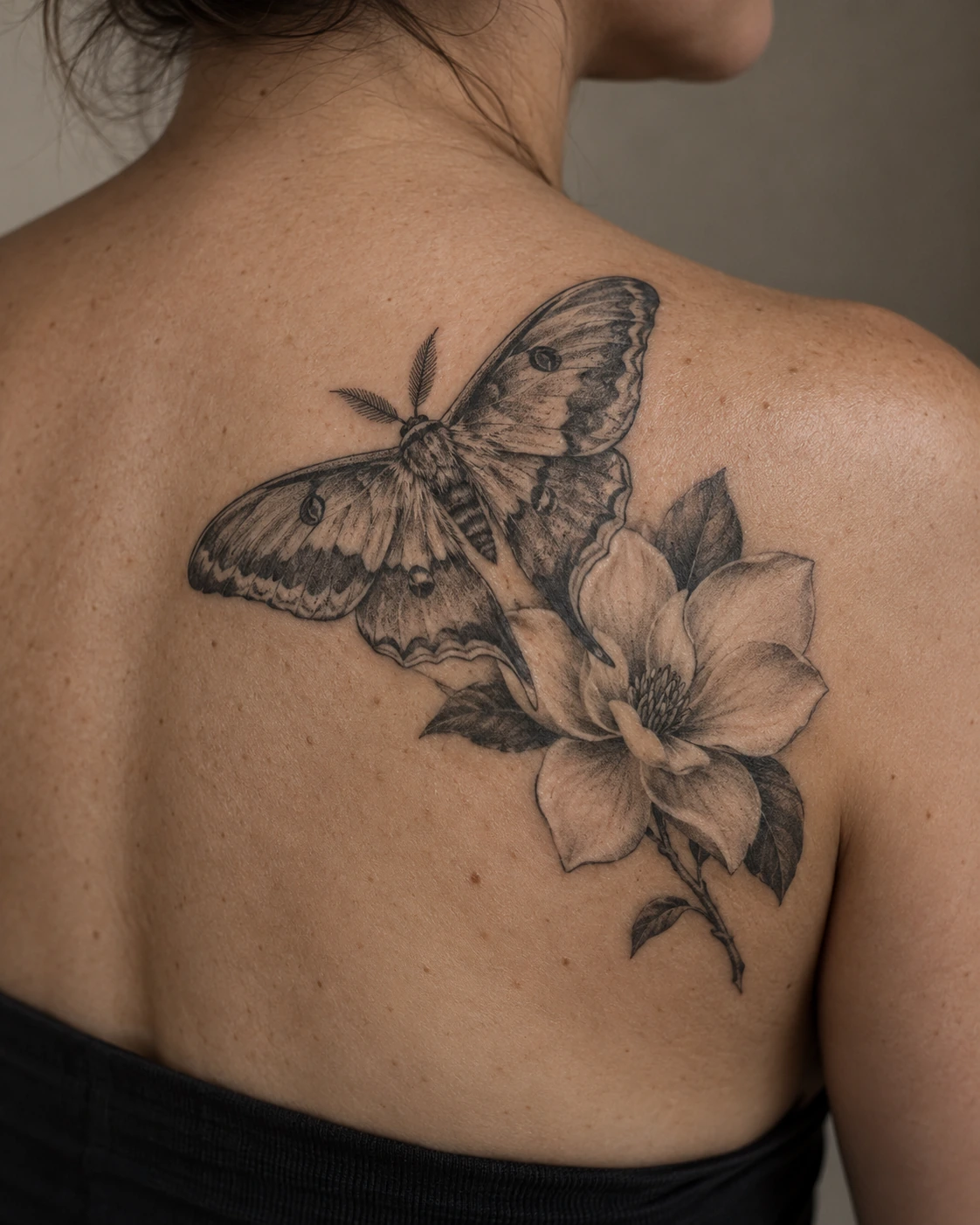
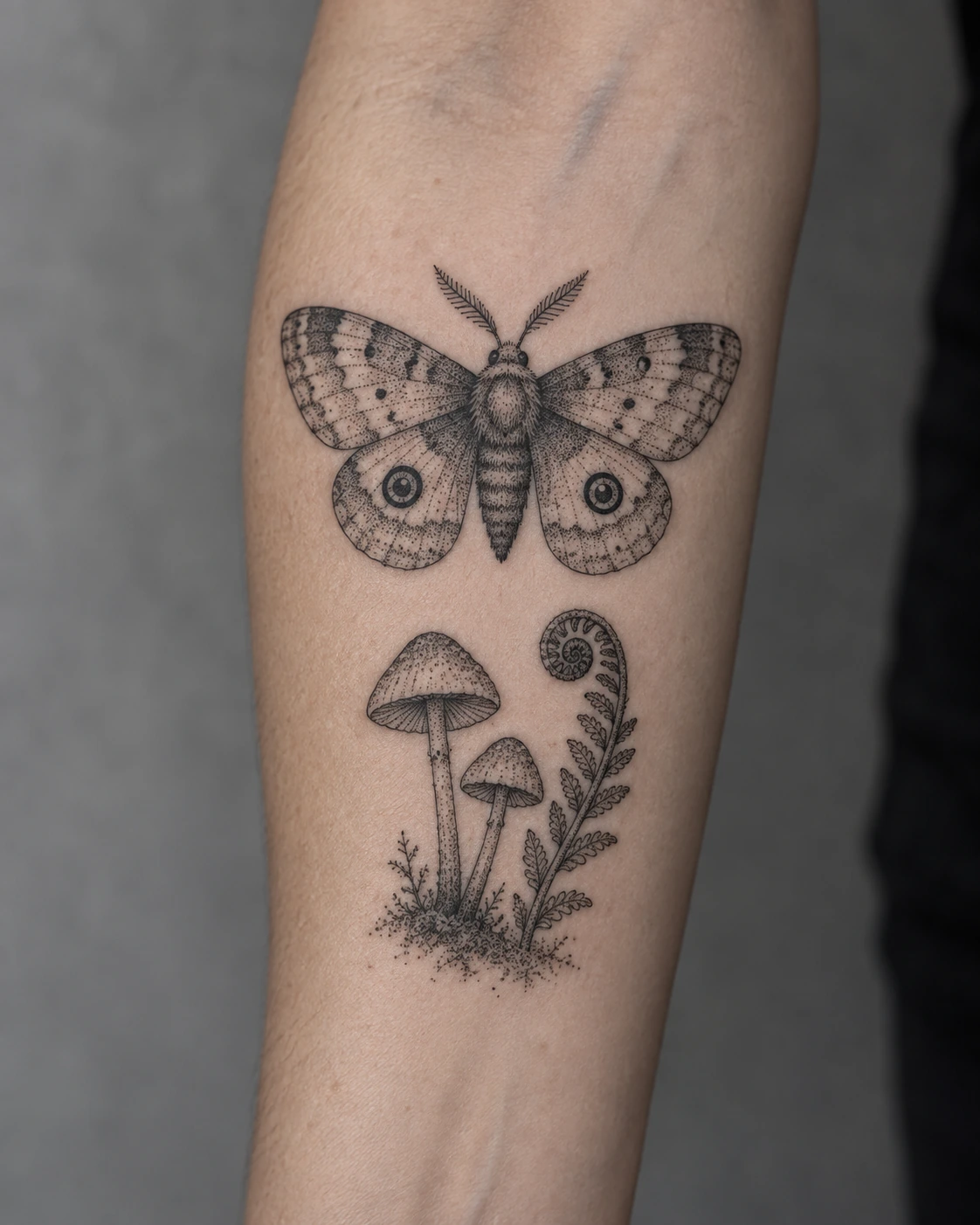
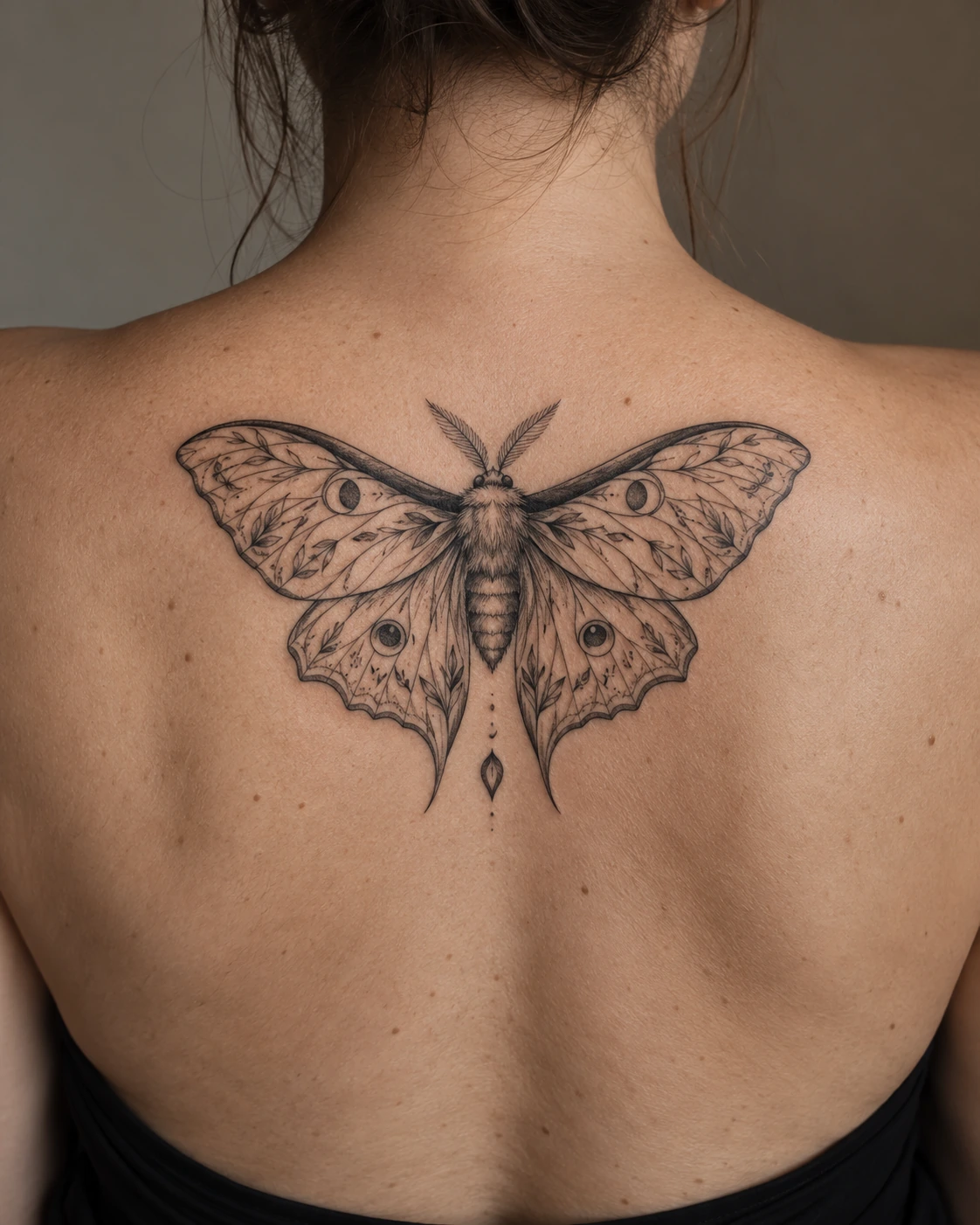
Botanical elements change both the outline and the mood of a moth tattoo. A broad flower gives the wings a rounded counterpoint; a slender stem creates an upward or downward flow. In these designs, the moth stays readable even where leaves and petals frame it. The woodland composition replaces flowers with mushrooms and a fern, leaving a clear gap below the moth so each element remains readable.
Choose a plant because its shape, color, or personal association fits the piece. You do not need to attach a universal meaning to every petal. Keep some breathing room between stems, wing edges, and antennae, especially in a smaller composition where overlapping lines can become difficult to read.
Small, fine-line, and ornamental moth tattoos
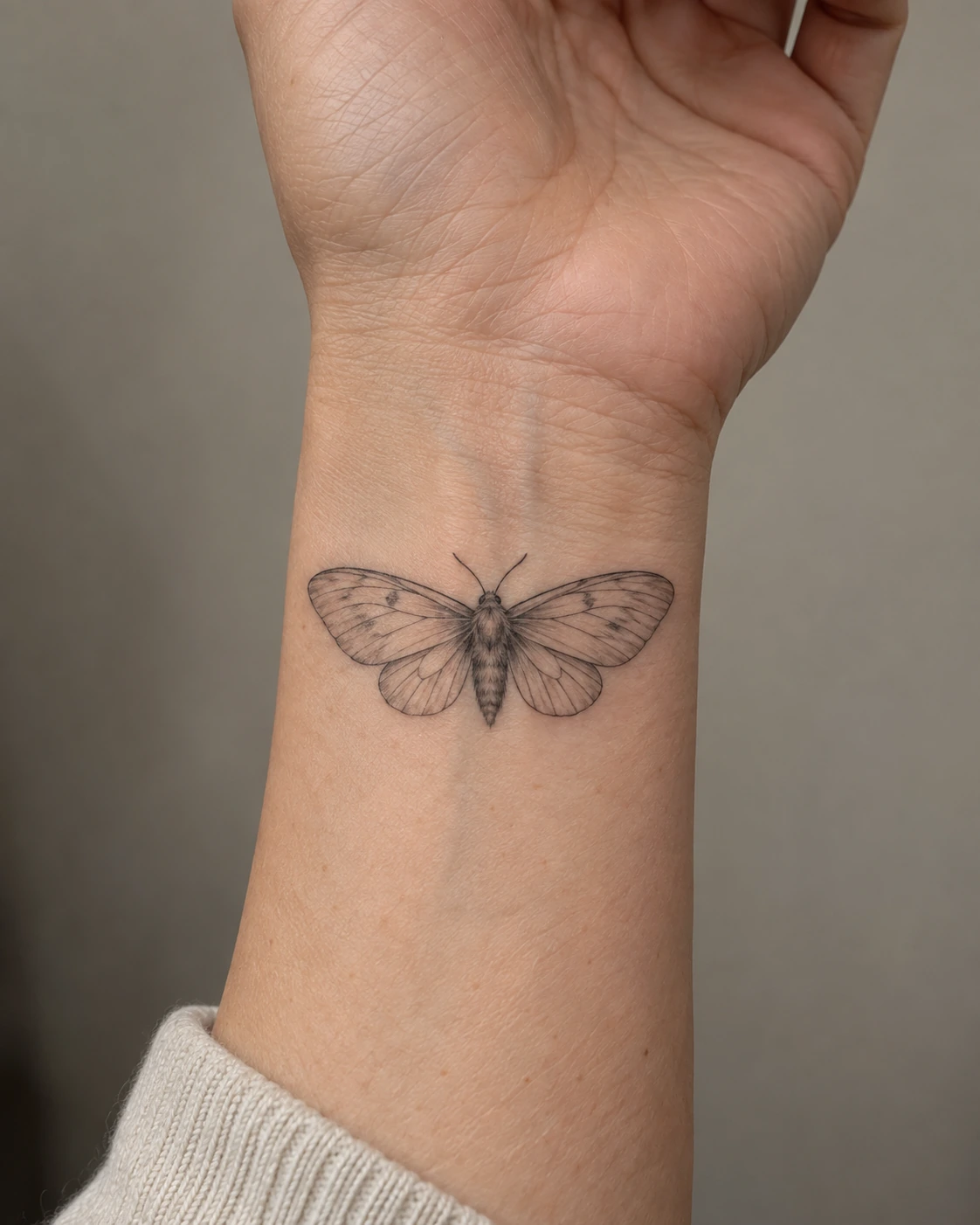
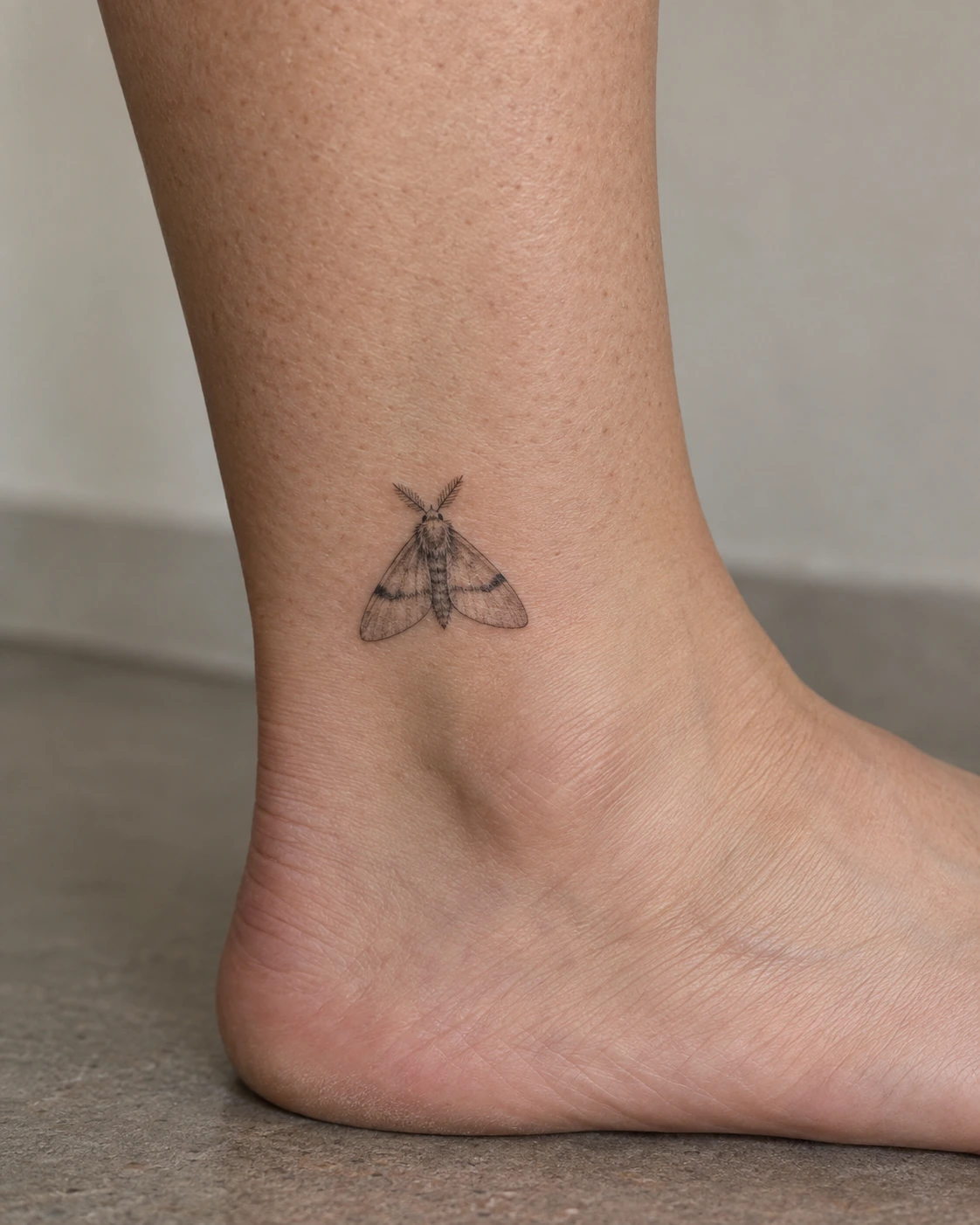
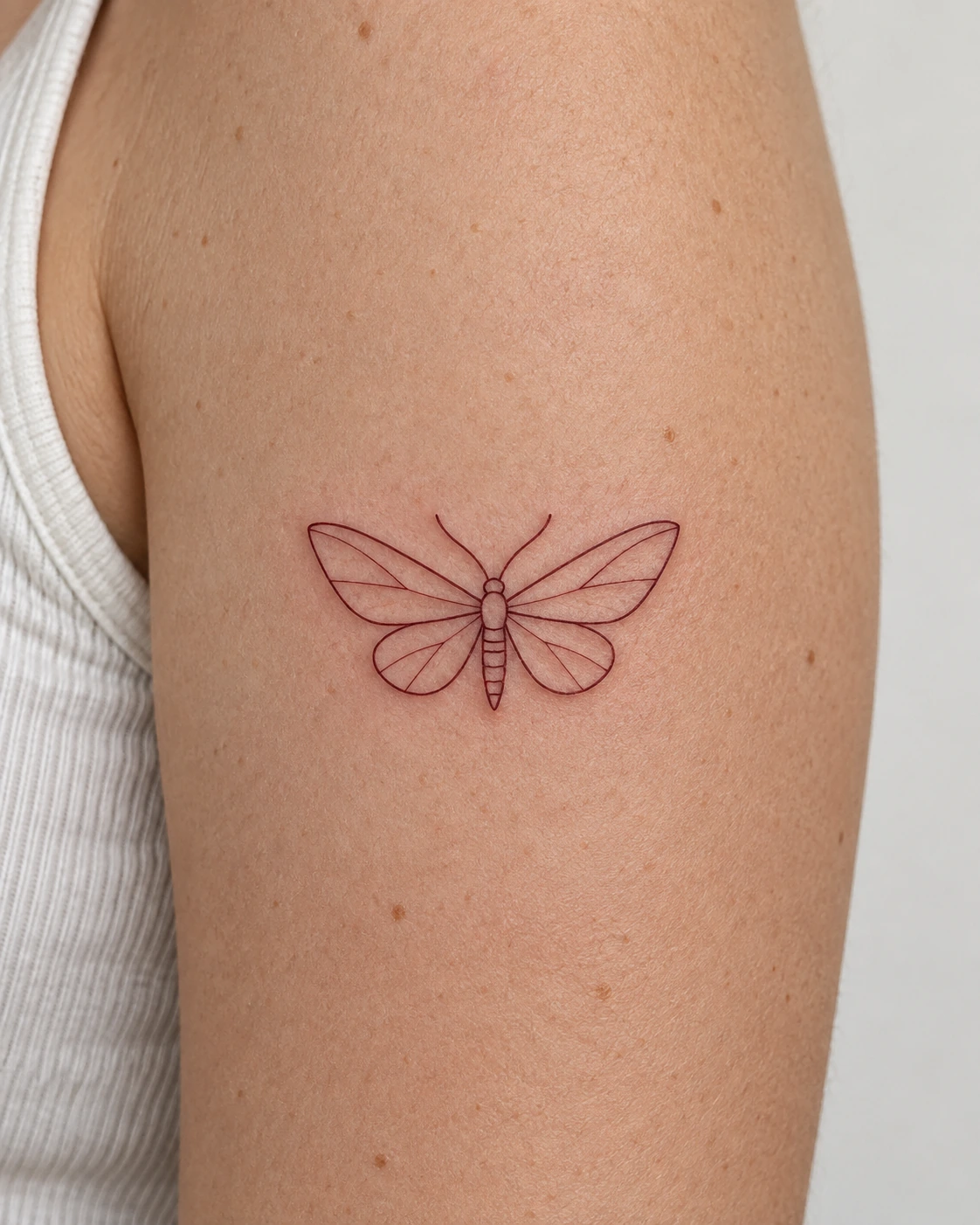
A small moth tattoo benefits from a clear silhouette and selective detail. Fine outlines, a few wing markings, or carefully spaced dots can describe the insect without filling every available space. Ornamental patterns offer another direction, but the body should still remain easy to distinguish from the decoration. The dark-red outline version shows how a single ink color and a handful of interior lines can change the character of a simple moth.
Use these images to compare levels of detail rather than to choose a final size from a screen. Ask your artist which lines and gaps can be kept at the scale you want. A simpler design may be a better fit for a compact area; a more elaborate wing pattern needs enough room to stay distinct.
Choosing a placement
Match the outline to the space available, then review the stencil with your artist. These are composition suggestions rather than fixed rules.
| Placement | Design direction | What to check |
|---|---|---|
| Forearm | A long luna moth or a compact resting-wing design | View the stencil with the arm relaxed and rotated. |
| Upper arm | A broad moth or a floral composition | Check how both wing edges follow the curve of the arm. |
| Upper back | Open wings, paired ornament, or a centered moon | Compare the centerline with the shoulders in a relaxed pose. |
| Thigh or calf | Long tails, flowers, or a moth above a candle | Leave room for the whole composition rather than squeezing the final detail. |
| Wrist or ankle | A simplified small silhouette | Have the artist assess how much detail fits the available space. |
Details to review with your tattoo artist
Start with the central axis: the head, thorax, and abdomen should form a believable connected body. Check both antennae and the places where the wings meet the thorax. Legs can be hidden in a top-down view; adding a fan of arbitrary lines does not make the design more realistic.
Then compare the paired wings. They should feel like parts of the same insect, although a tattoo following curved skin may not look perfectly mirrored in a photograph. Keep decorative moons, dots, petals, and frames visibly separate from anatomical features.
Finally, inspect the line spacing and the design at its intended scale. Bring your preferred image and a short list of changes to your artist. These concepts are references for a consultation, rather than finished stencils or a guarantee of how pigment will look on your skin.
Frequently asked questions
What does a moth tattoo mean?
It can represent a personal idea such as transformation, persistence, remembrance, or curiosity about the unknown. It can also be an aesthetic choice. There is no mandatory meaning attached to the design.
What is the difference between a luna moth and a lunar moth tattoo?
Luna moth names the insect that inspires the long-tailed wing shape. Lunar describes a moon-related idea, so a lunar composition may combine a moth with a crescent or other night imagery.
Does a death head moth tattoo need a large skull?
No. The central marking can be understated or deliberately stylized. A larger human-like skull creates a more graphic interpretation; it is a choice about the artwork, not an anatomical requirement.
Can a moth tattoo work in black and gray?
Yes. Wing boundaries, pale eyespots, open skin, and controlled shading can create contrast without color. Compare those features rather than judging only by how dark the image looks.
Which moth tattoo design should I show my artist?
Pick the silhouette you like first, then identify the color, line weight, and placement you prefer. One primary reference with specific notes is a clearer starting point than asking the artist to combine every detail from several images.
Choose the moth whose shape you would still enjoy without its surrounding decoration. From there, refine the scale, palette, and extra motifs with your artist. A clear structure and a few intentional details can make the design feel personal without making it crowded.
Images in this post are AI-generated tattoo concepts for inspiration, not photographs of completed tattoos.