A How to Train Your Dragon tattoo can be as small as Toothless’s familiar silhouette or as detailed as a flight scene with Hiccup. The strongest choice usually starts with one thing you love about the story: the dragon’s expression, a moment of trust, a shared adventure, or the contrast between Toothless and the Light Fury.
Explore six design directions below, with 10 placement concepts on skin and three outline or pencil references. Start with the pose and the overall shape, then compare the linework, color and placement. These animated-character-inspired concepts give you a starting point to develop with a tattoo artist.
Explore the styles: Detailed Toothless · Small & simple · Couple & matching · Hiccup & friendship · Color & story · Symbols & blackwork
What can a How to Train Your Dragon tattoo mean?
For some fans, Toothless represents the friend who understands them without needing an explanation. For others, the connection is independence, loyalty, learning to trust, or simply a film they grew up loving. These are personal readings of the story, not a fixed code that every dragon tattoo has to follow.
Hiccup and Toothless can make friendship the center of a design. Toothless and the Light Fury can suggest companionship or two distinct personalities moving together. A single sleeping dragon may have a much quieter meaning: comfort, familiarity, and a character that still makes you smile.
DreamWorks identifies Toothless as a Night Fury and the Light Fury as a separate dragon type. Keeping their faces, silhouettes, and colors distinct helps a paired tattoo feel connected to the characters you intended. You do not need a quote, a date, and several symbols to make that connection clear.
Find a design direction
| If you prefer | Start with | Detail to review |
|---|---|---|
| A small, discreet design | A flying silhouette or a simple seated outline | Keep the head, wings and tail readable before adding facial detail. |
| A character-focused tattoo | A Toothless portrait or sleeping pose | Give the expression enough room and keep the muzzle recognizable. |
| A matching design | Separate Toothless and Light Fury tattoos | Choose a shared scale and line weight; each piece should work on its own. |
| A story or friendship piece | A first-touch detail or Hiccup flight scene | Decide which gesture or moment matters most. |
| A bolder decorative piece | Blackwork, geometric framing or restrained color | Keep the character clear inside the additional styling. |
Detailed Toothless tattoo ideas
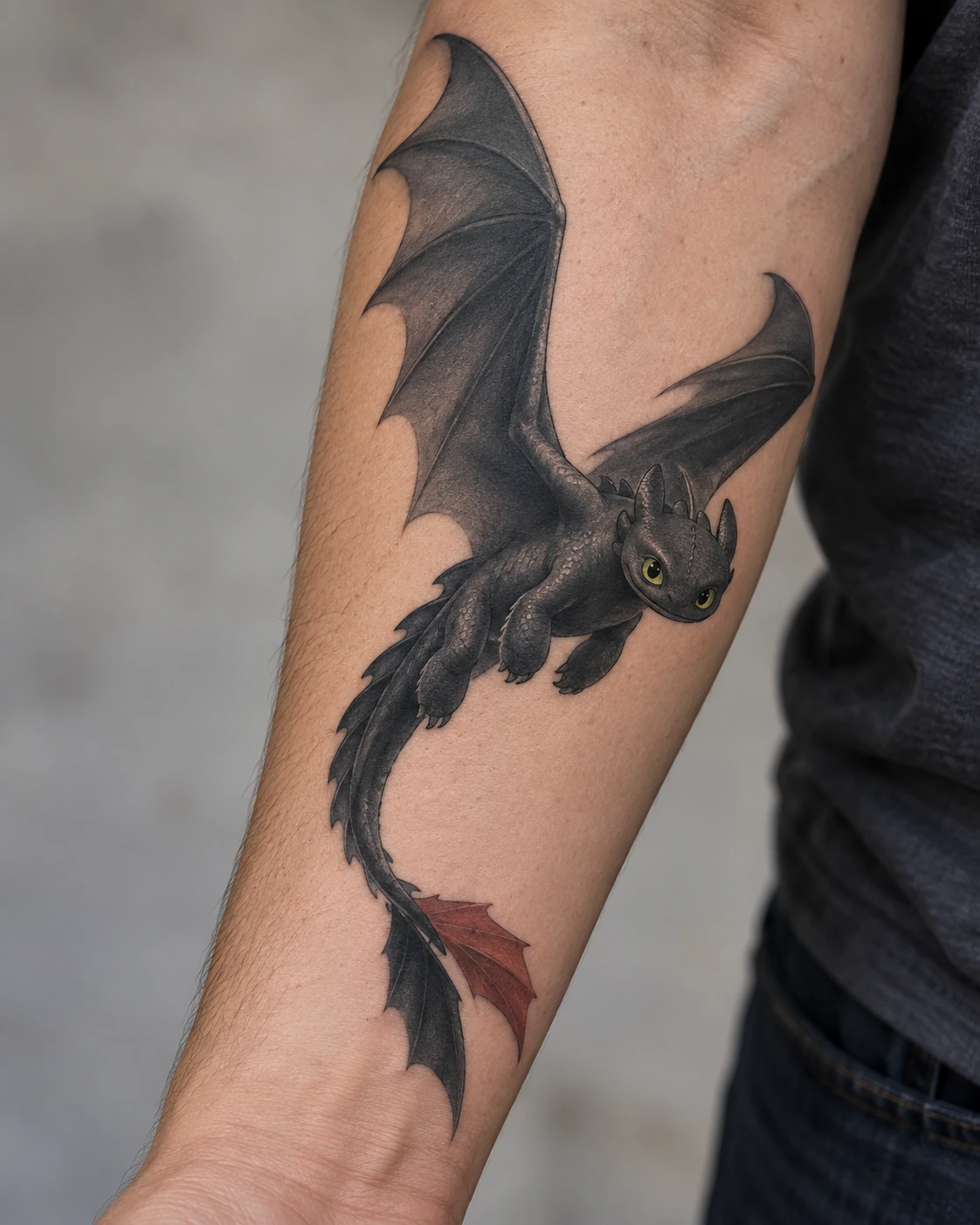
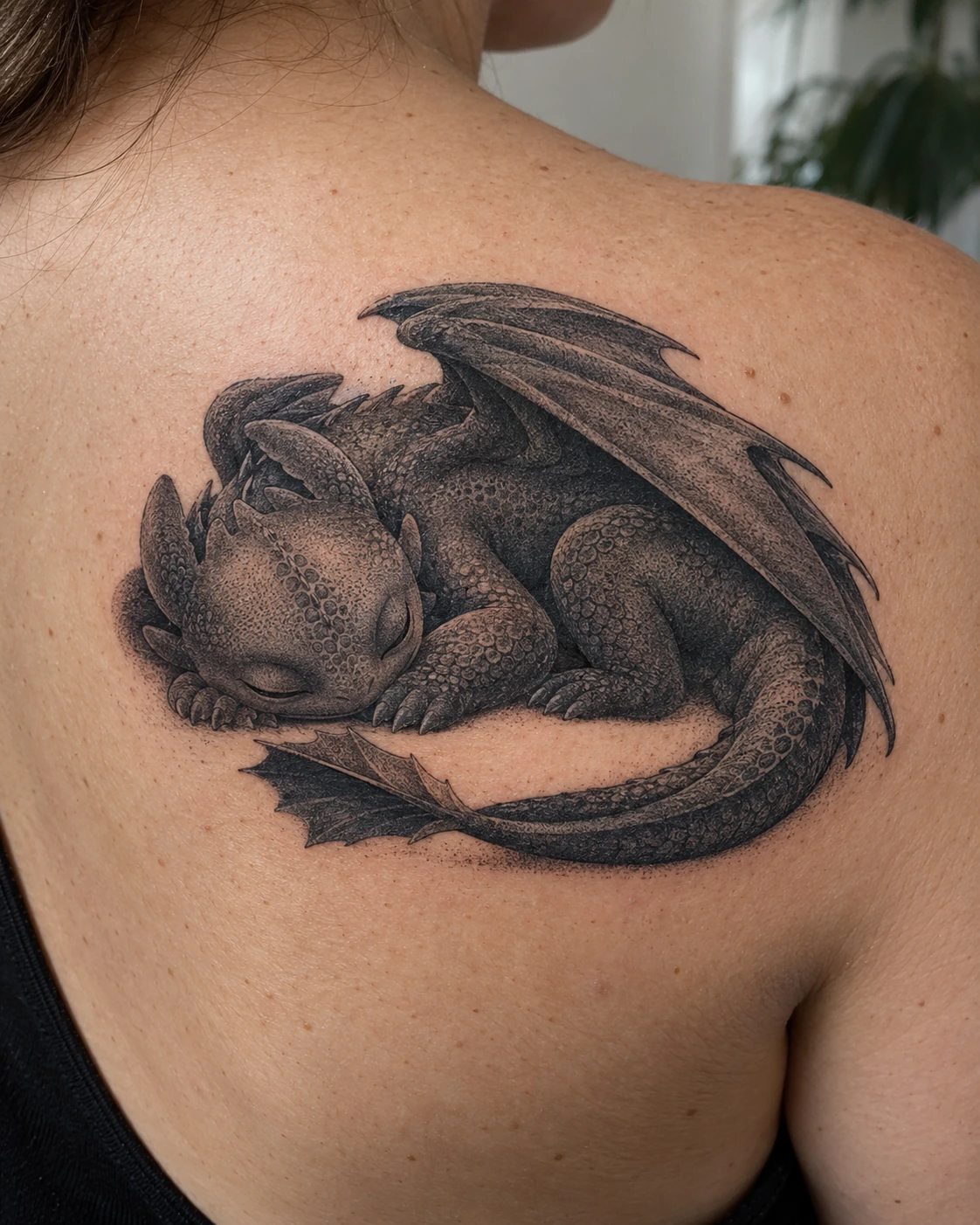
A detailed How to Train Your Dragon Toothless tattoo puts character recognition first. The banking dragon uses the length of the forearm, with the wings opening away from the body and a small red tail-fin accent. The sleeping curl creates a quieter, more compact shape on the shoulder blade.
Compare the mood as well as the detail. The flight pose suggests movement; the sleeping dragon concentrates attention on the face and folded body. In both, open skin and lighter shading help separate the paws, wing edges and tail from the darkest areas.
Choose the detail you want to notice first. If that is Toothless’s face, the surrounding scales do not need equal emphasis. If it is the flight pose, preserve the shoulder-to-wing connections and the tail’s path before adding texture.
Small and simple How to Train Your Dragon tattoos
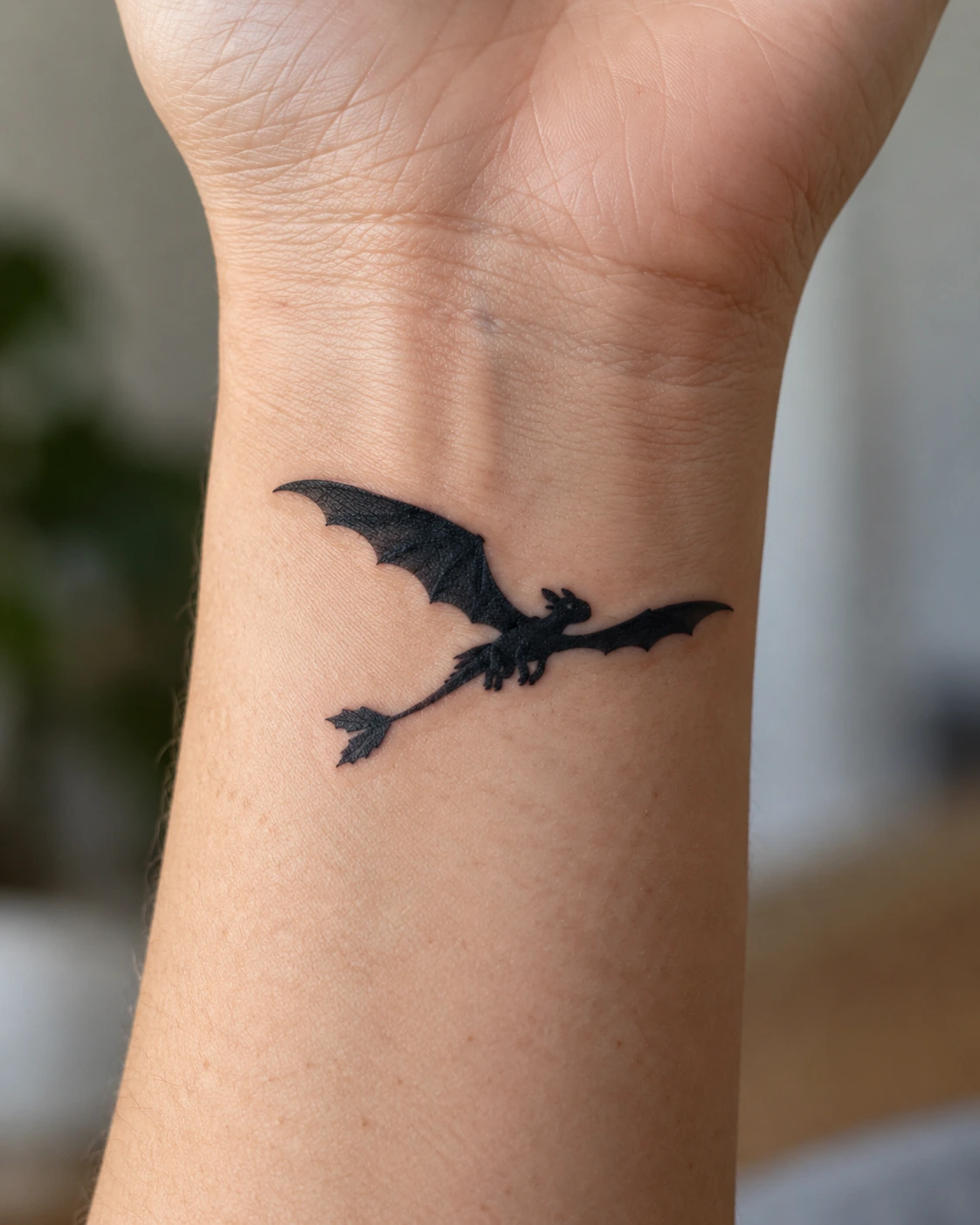
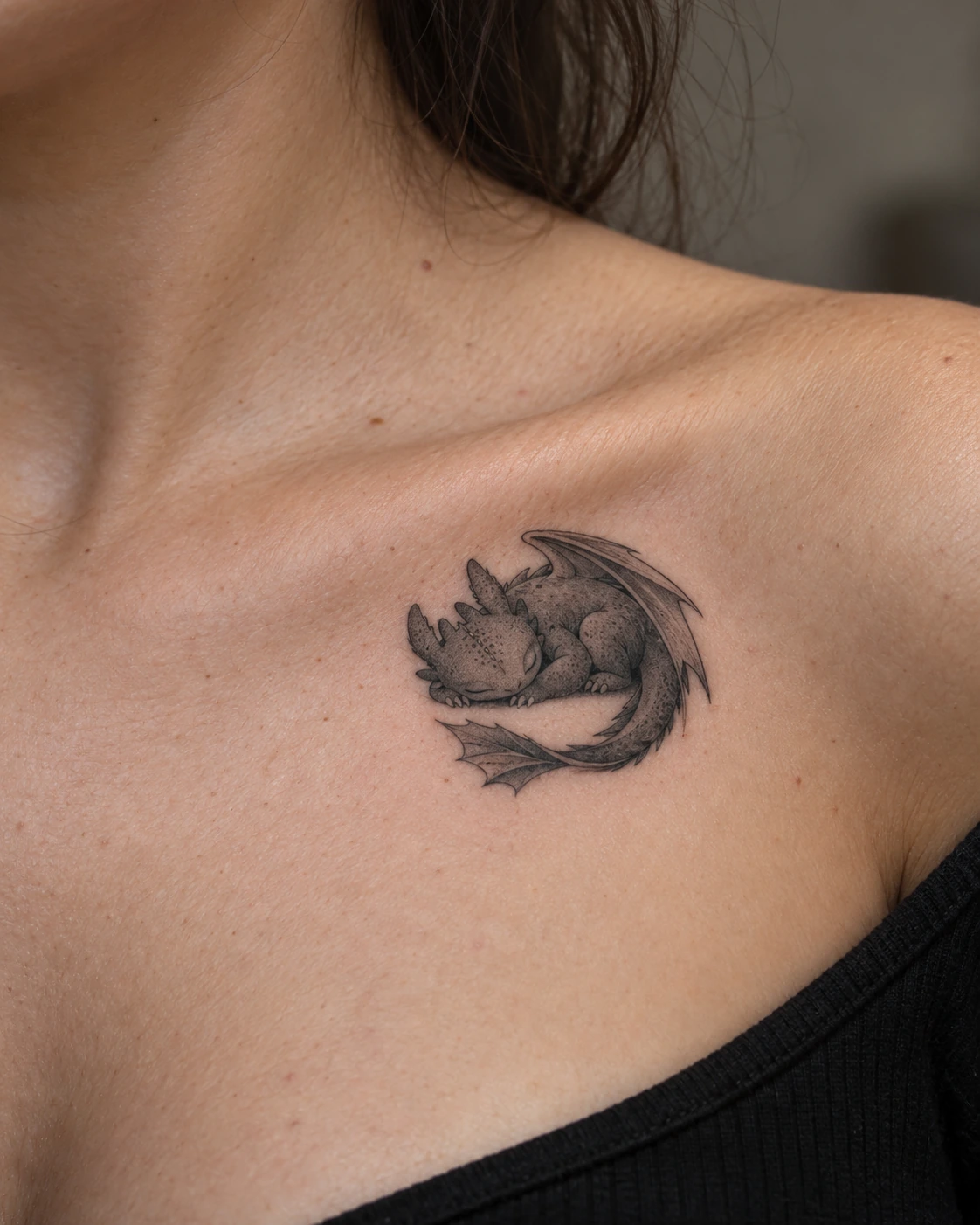
A small How to Train Your Dragon tattoo works best when you can recognize it from its outer shape. The wrist design uses the spread wings and long tail. The curled sleeper near the collarbone uses a rounded outline and a much calmer pose.
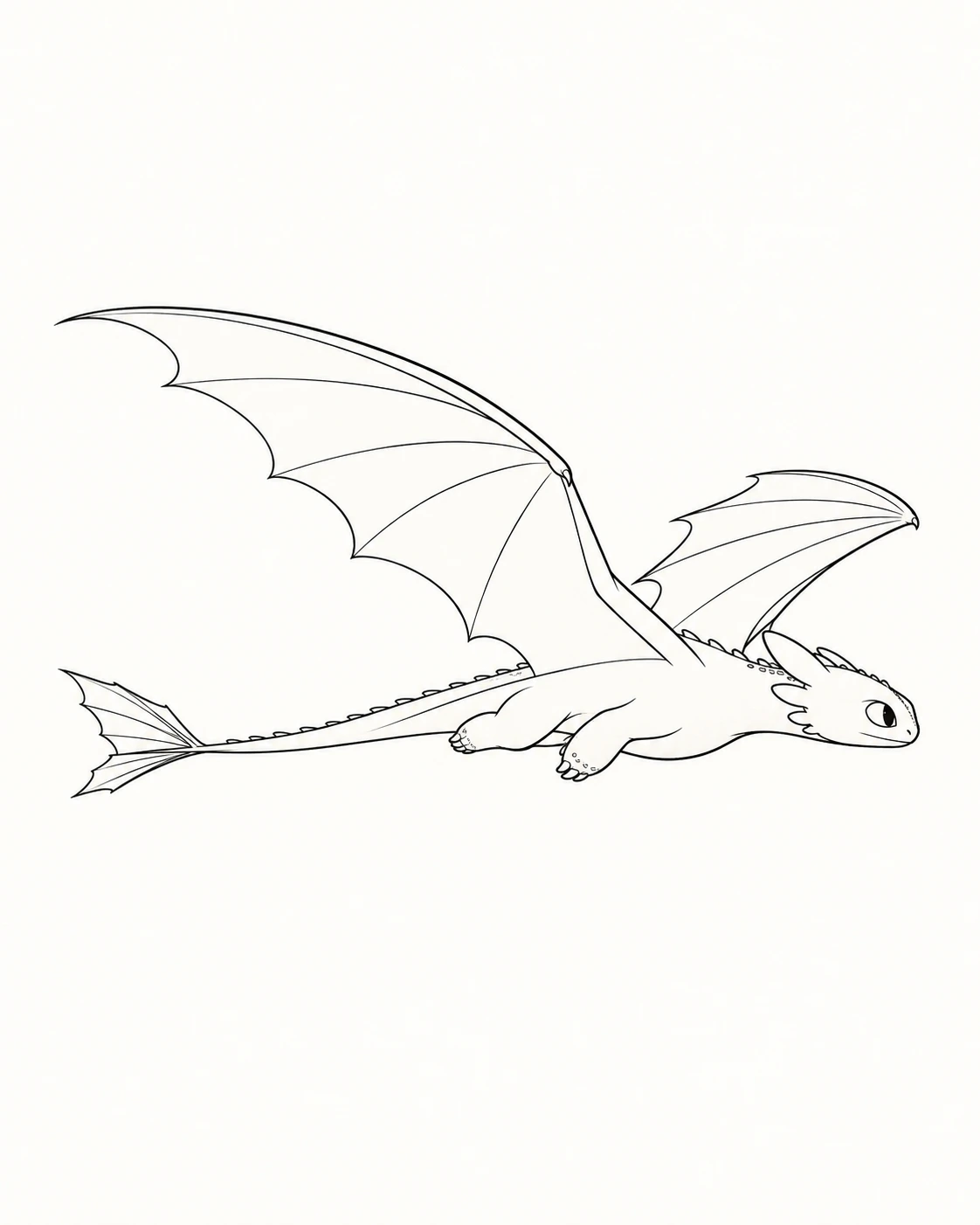
Minimalism is a choice about what to leave out. A small flight silhouette does not need individual scales, while a sleeping dragon may need only a few carefully placed lines to suggest its expression. A larger outline reference below makes the body’s connections easier to discuss with an artist.
These are placement concepts, not fixed-size templates. Show your artist the space you have in mind and let them adjust the lines. For more ways to simplify a winged silhouette, compare the small designs in our bat tattoo ideas.
Simple flight outline
Toothless and Light Fury: couple and matching tattoos
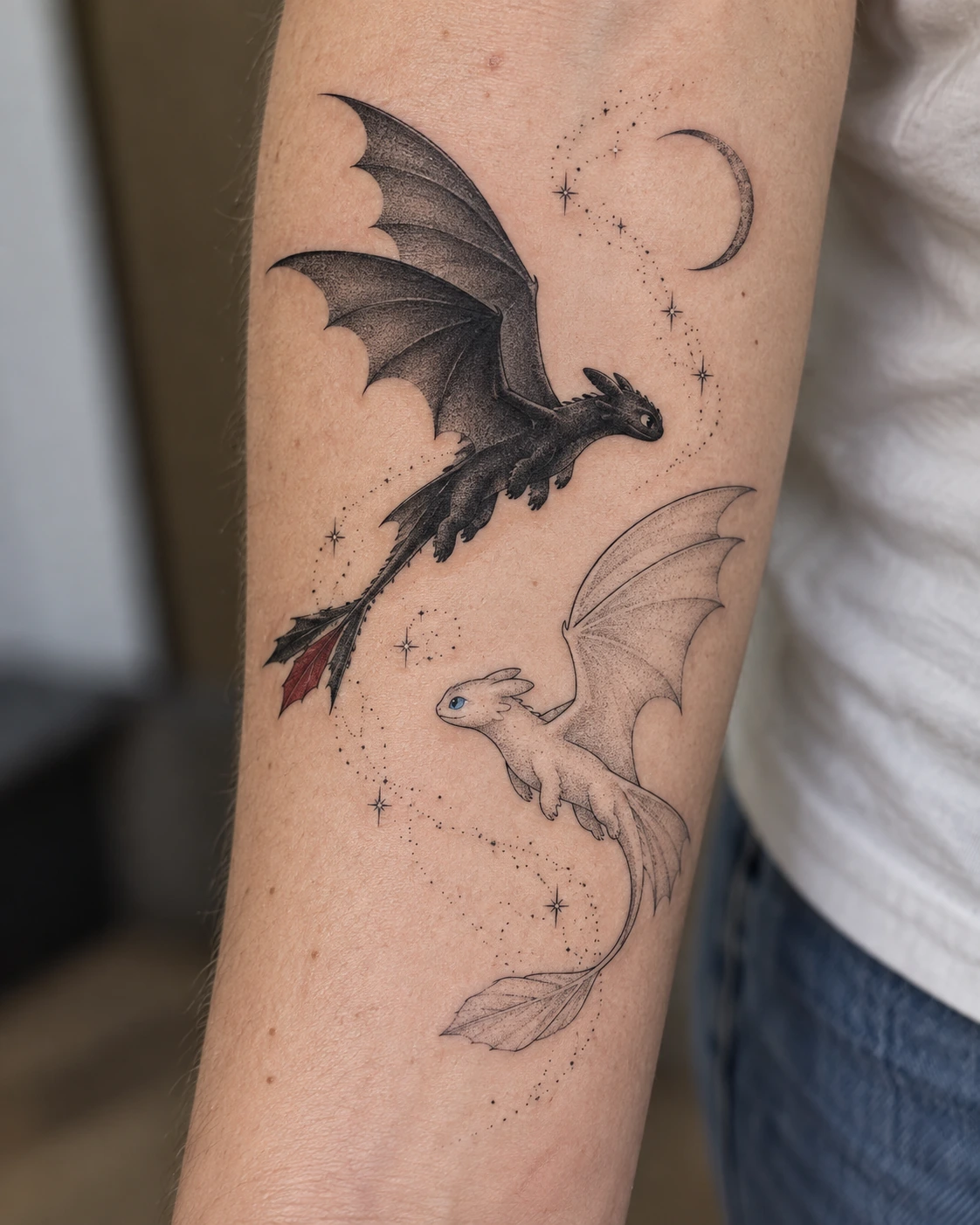
A How to Train Your Dragon couple tattoo can use two characters without turning them into one tangled shape. The paired flight concept places Toothless and the Light Fury at different heights beneath a crescent moon. Their wings and tails remain separate, giving each dragon its own outline.
For matching tattoos on two people, you could adapt that idea into one character each. Similar proportions and line weight can connect the pieces, while each design remains complete when the two people are apart. Matching does not have to mean identical.
For the Light Fury, think in terms of contrast rather than simply filling a dragon with white. The pale concept uses a clear contour, selective shading and open skin. A tattoo artist can adapt that balance to the placement and skin tone.
Hiccup and Toothless friendship tattoos
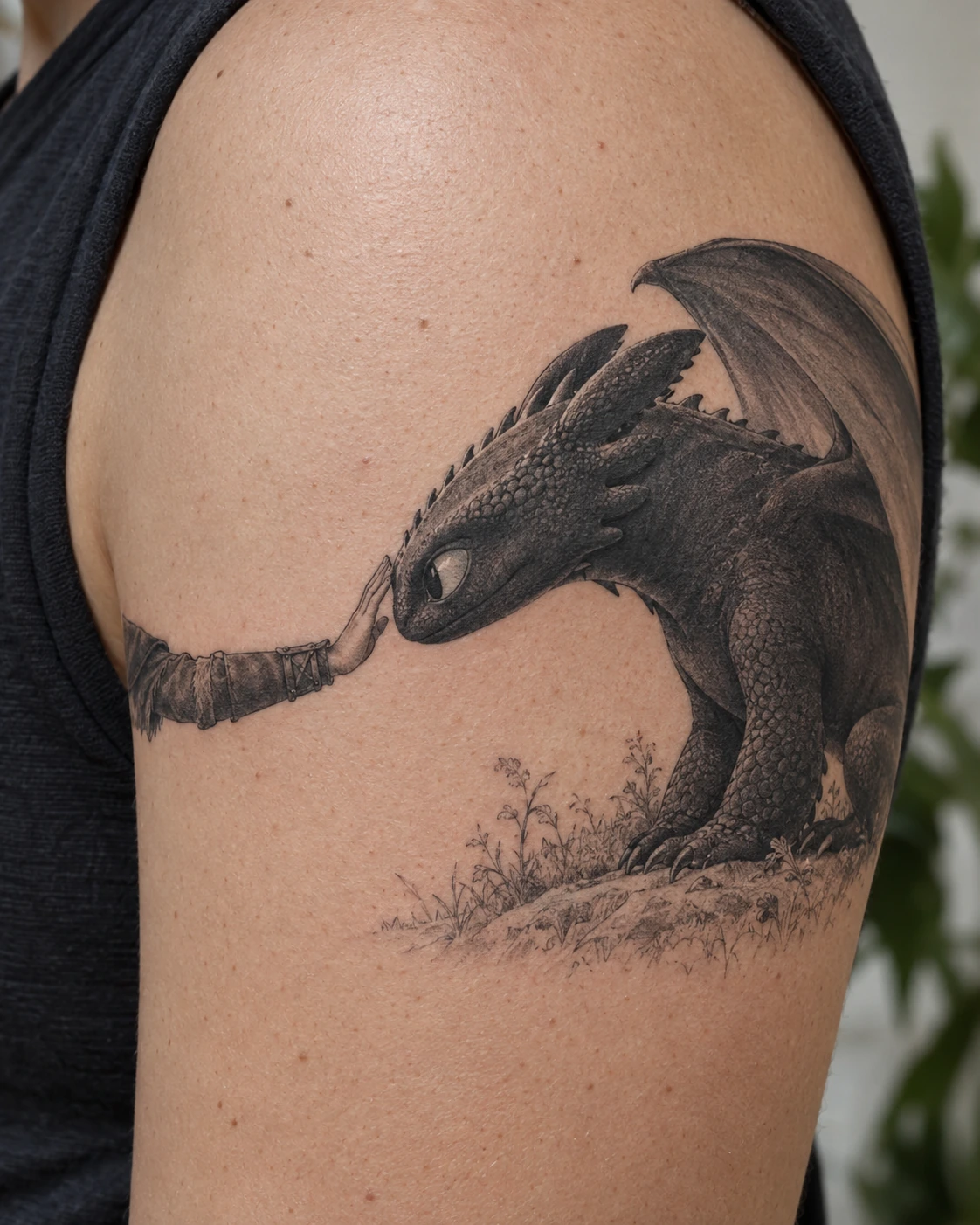
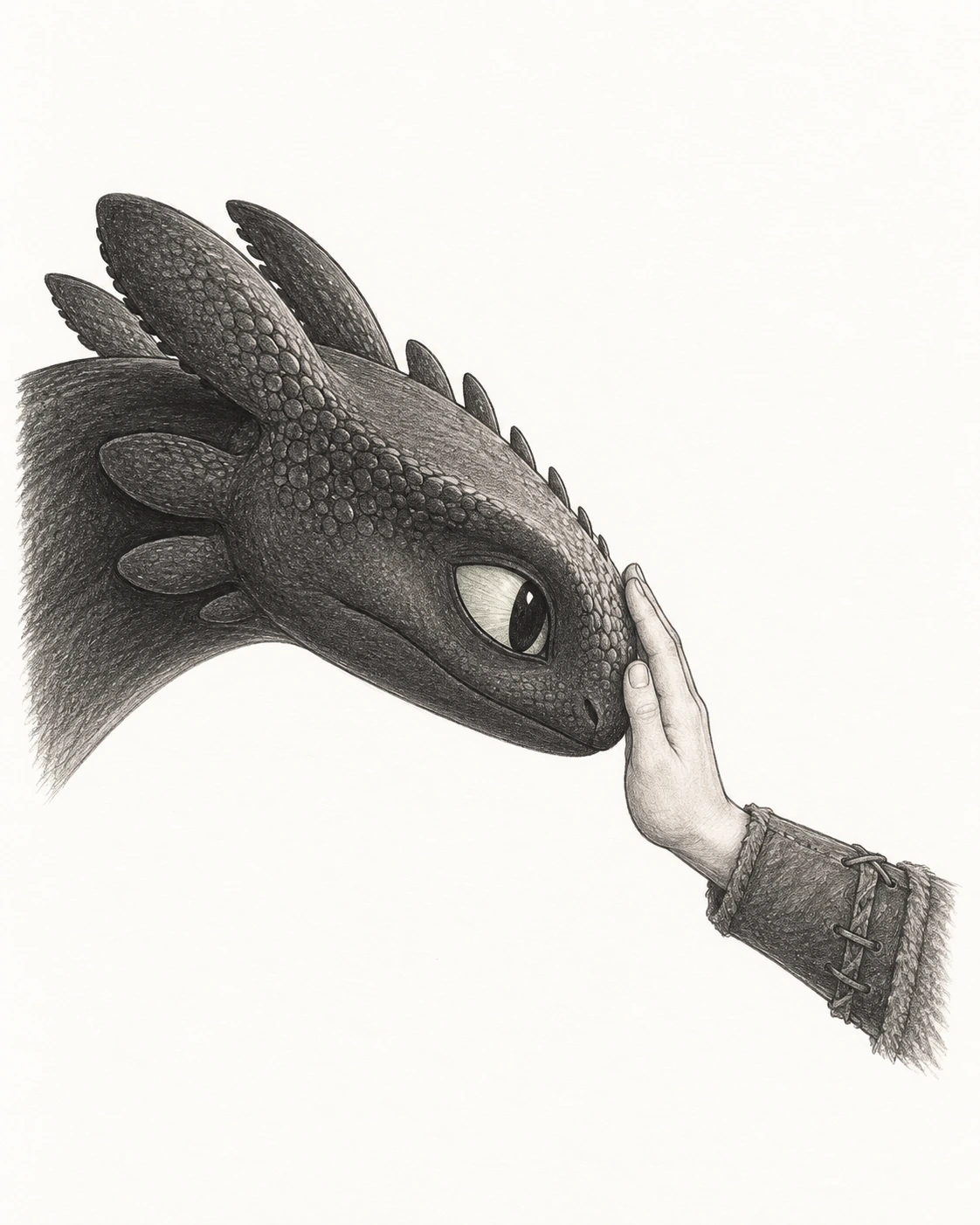
The first-touch motif makes a small gesture the center of the composition: a hand meeting Toothless’s muzzle. It can communicate trust without a written quotation. The main visual decision is how closely to crop the moment while keeping the hand and face distinct.
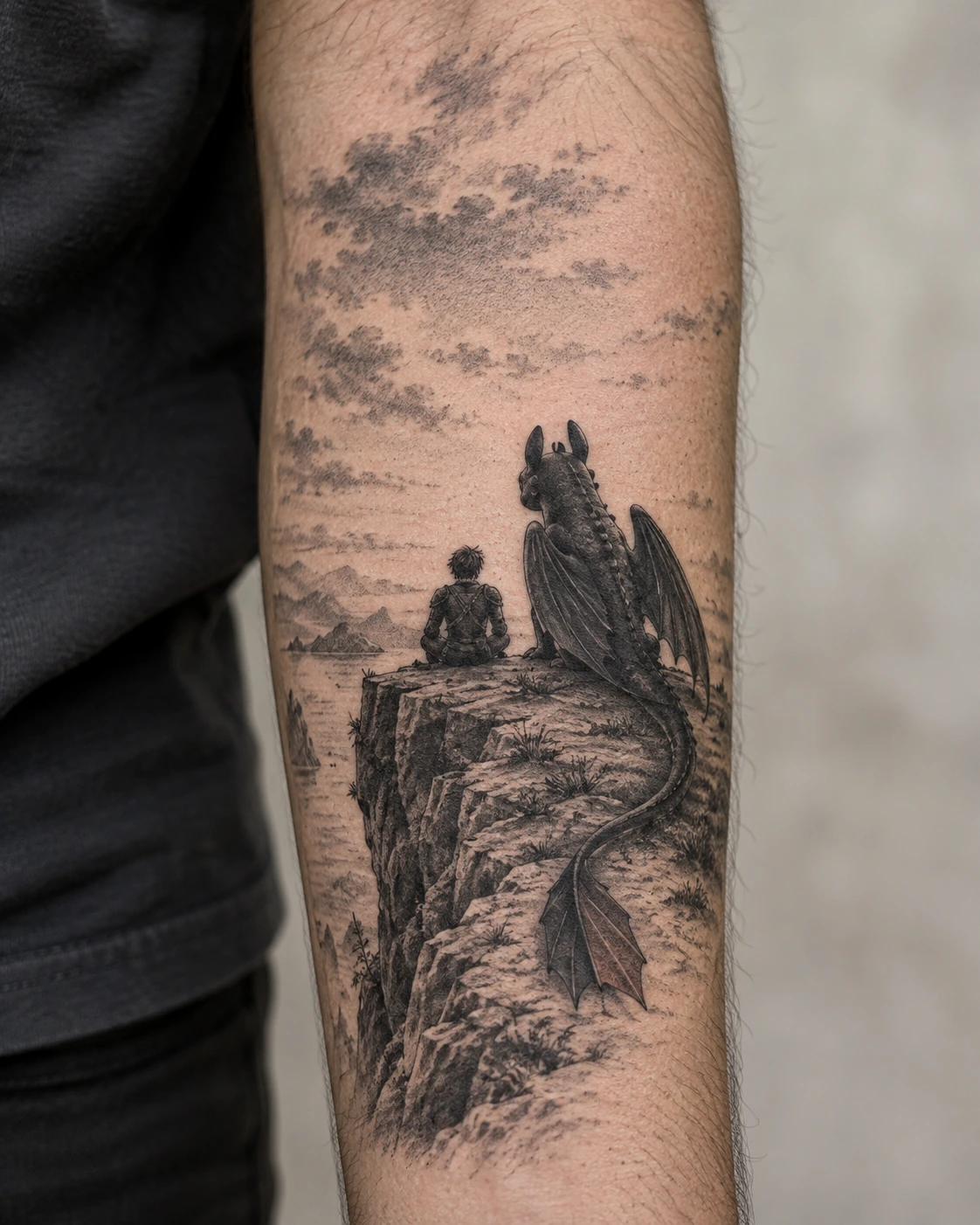
The cliffside companions design takes a wider view. Hiccup and Toothless sit together above a quiet landscape, seen from behind. The seated figures matter more than a miniature facial likeness, while the descending tail follows the length of the forearm.
Choose the moment before choosing the amount of detail. A close gesture suits a character-focused piece; a landscape gives the scene more atmosphere. The pencil reference below isolates the first touch so you can discuss the expression and hand position with an artist.
First-touch pencil study
Colorful and story-inspired dragon tattoos
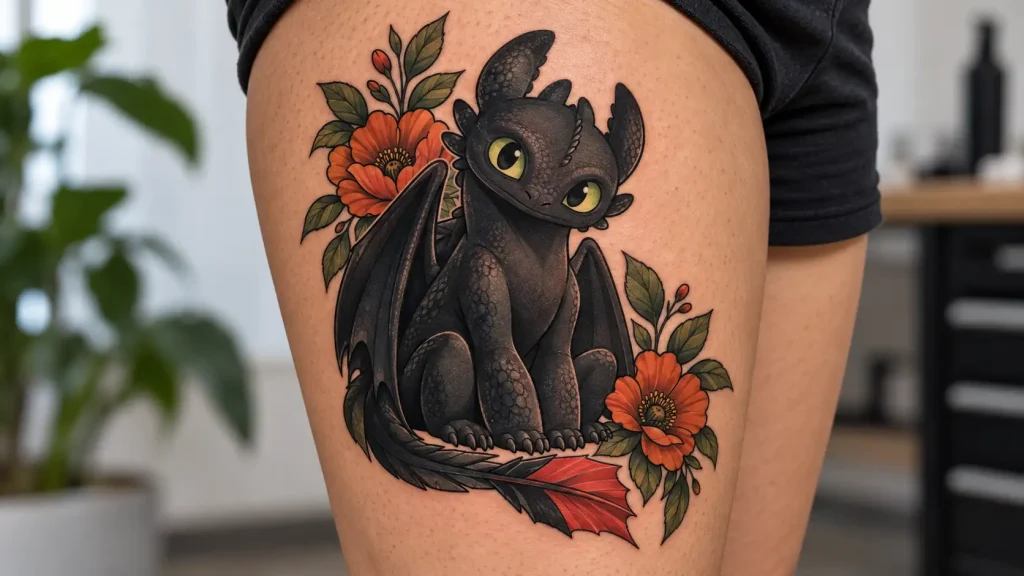
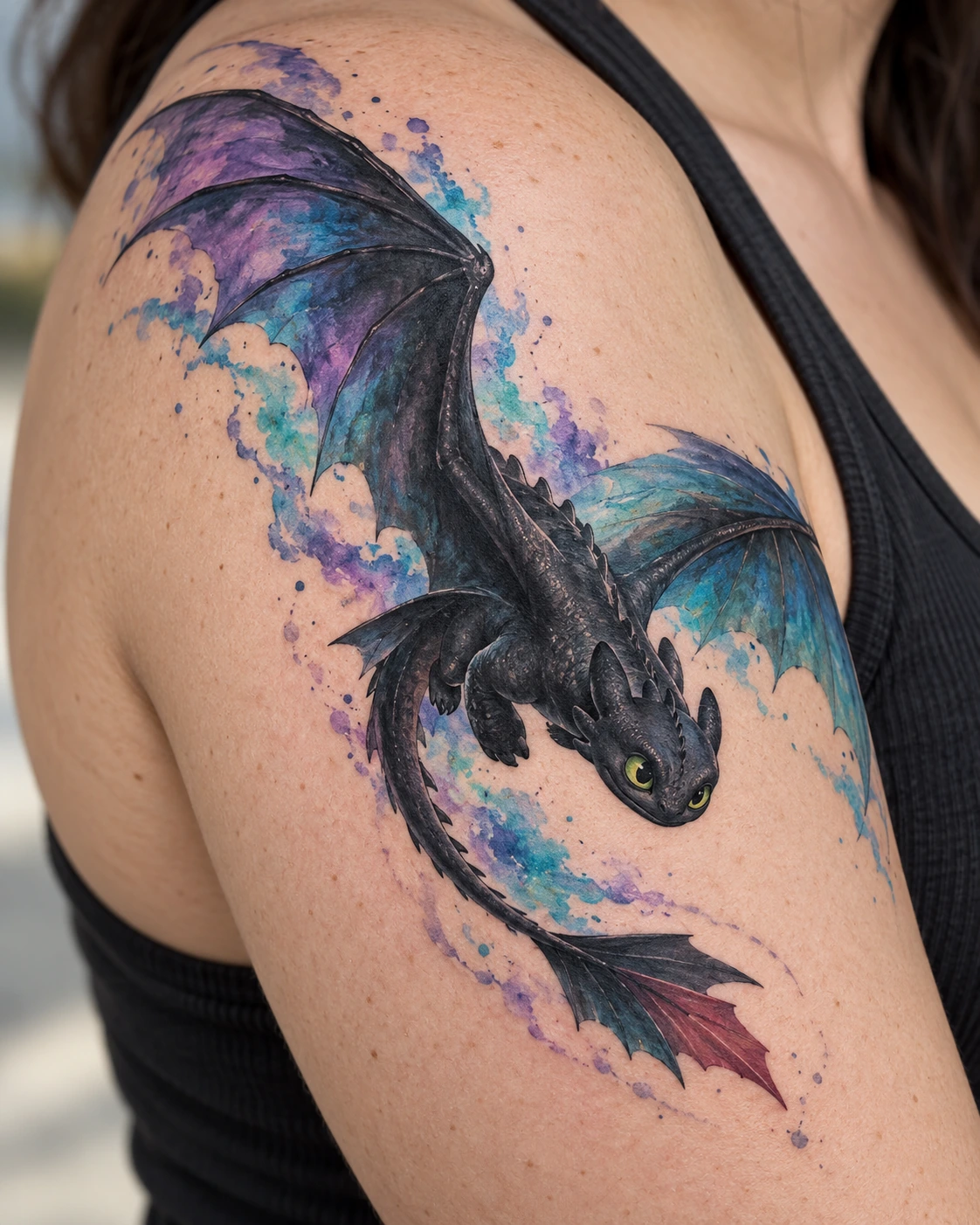
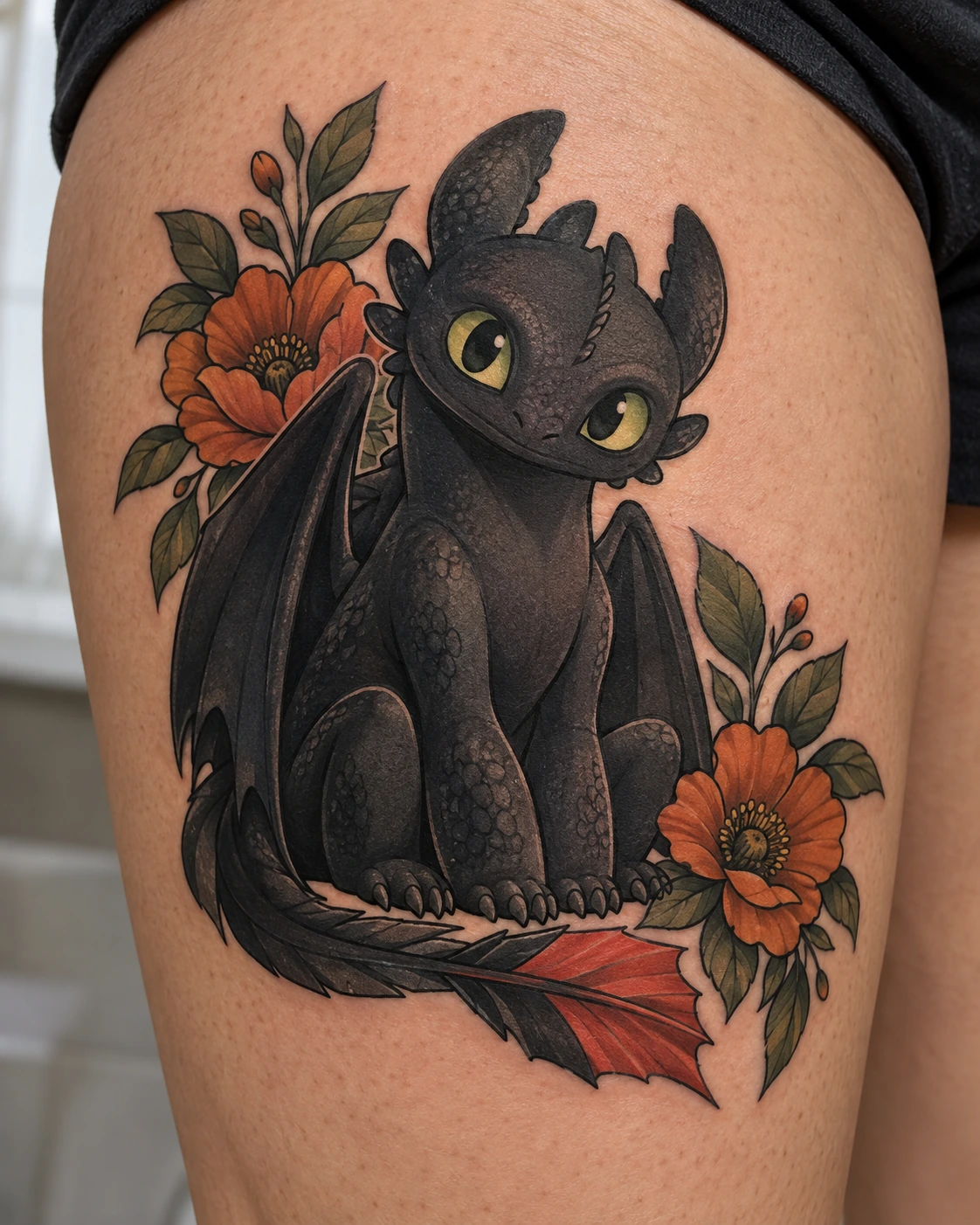
Color can change the atmosphere while keeping Toothless recognizable. Blue and violet watercolor follows the flight outline in the shoulder concept. The floral design takes a warmer approach, placing orange flowers and muted leaves around a seated dragon.
The watercolor design feels loose and energetic; the neo-traditional floral piece uses stronger outlines and a more contained shape. Both keep the eyes, wings and paws distinct from the surrounding decoration. The small red tail-fin accent gives the dark body another point of contrast.
Choose the balance of color and open skin with your artist. Petals and leaves need room around the paws and wing edges, just as a watercolor background needs enough separation from the dragon. If you prefer an airy botanical arrangement, our moth tattoo designs offer another set of compositions to compare.
Symbols, silhouettes, and bold blackwork
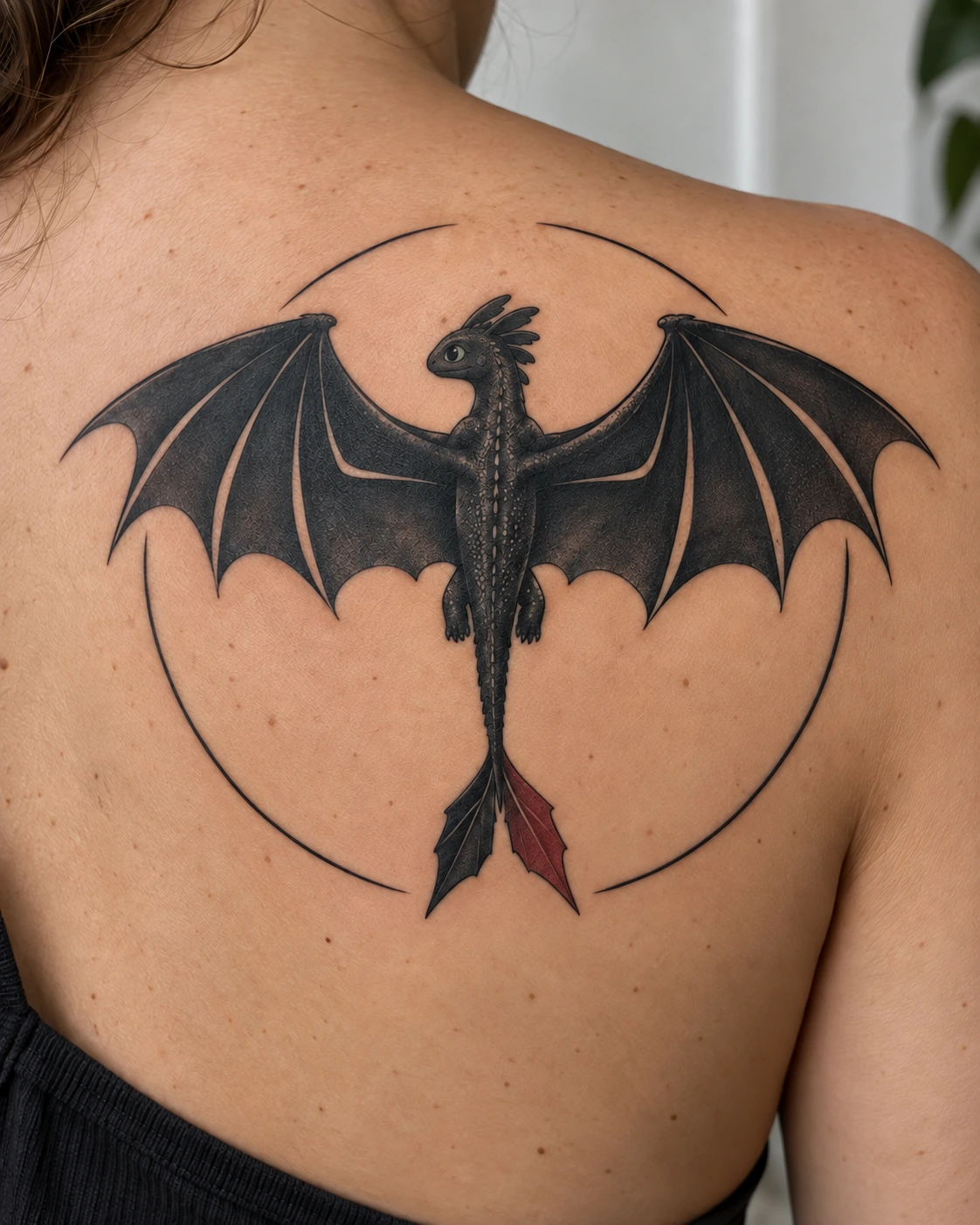
A symbol-inspired How to Train Your Dragon tattoo can use a strong outline instead of a detailed scene. The blackwork flight crest spreads the wings across the upper back, with an open circle framing the body and tail.
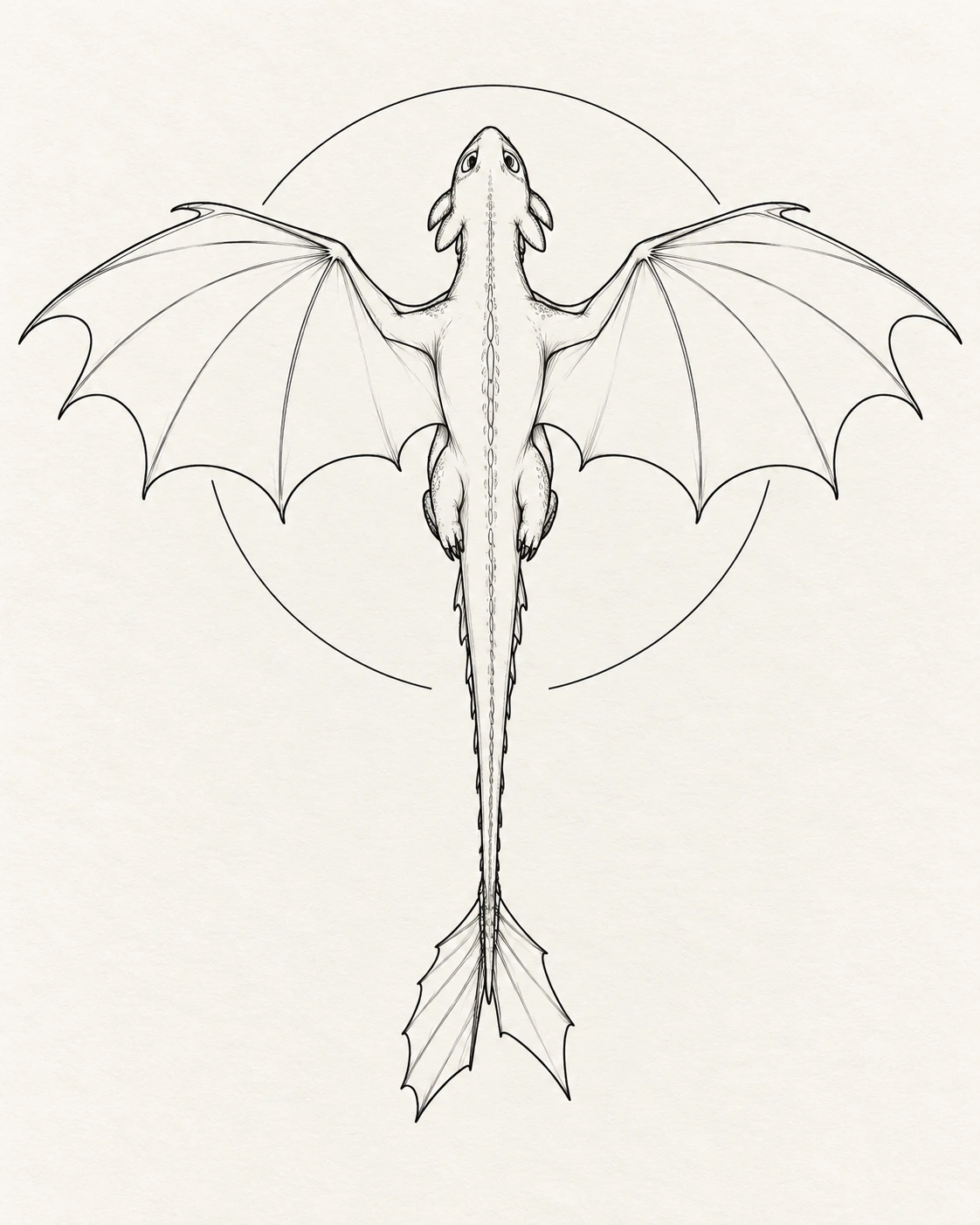
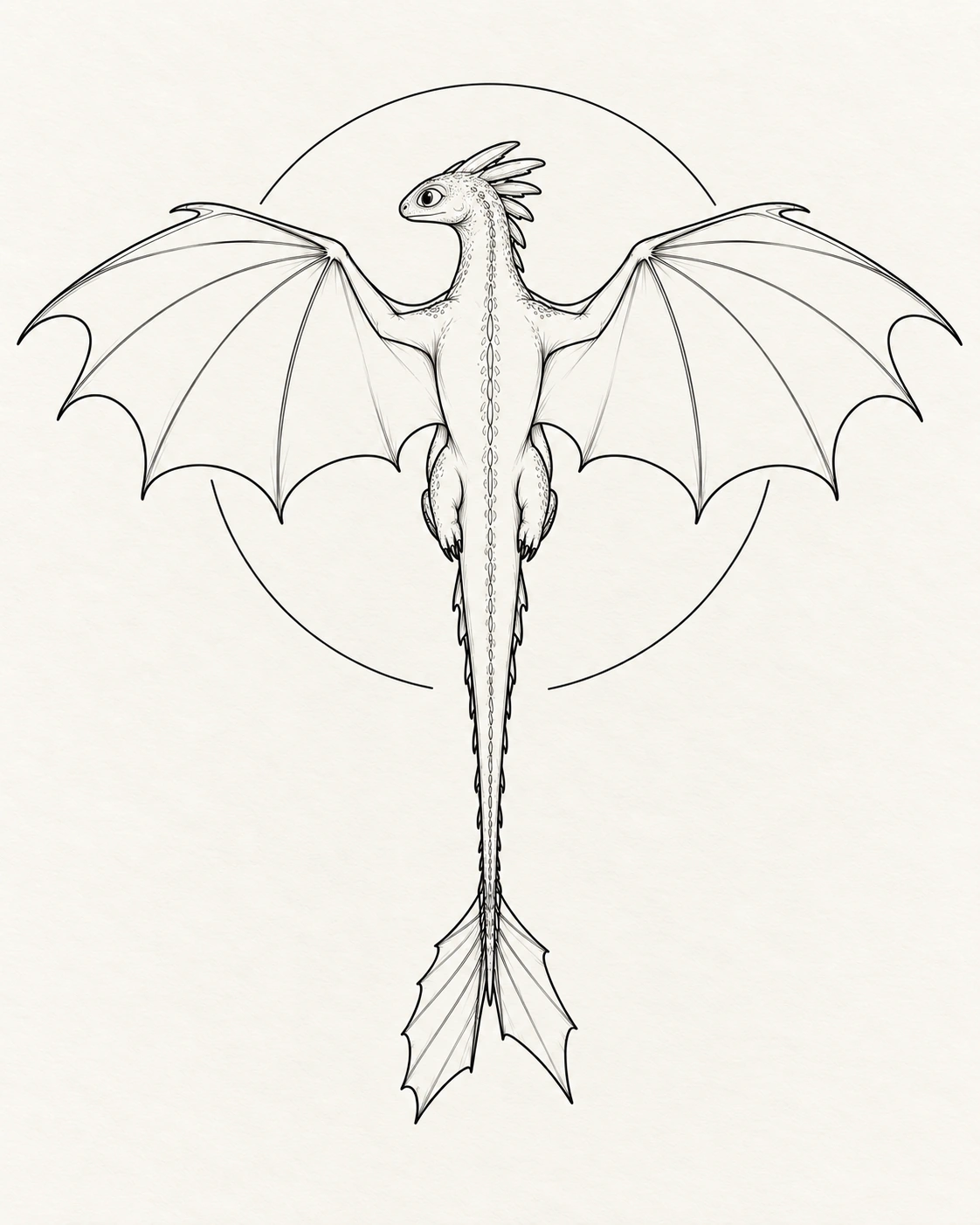
The circle is a decorative frame, not an official Viking emblem from the films. Its gaps keep the border from colliding with the wing tips and tail. The outline reference below shows the same general design direction with less emphasis on solid black shading.
Before choosing a large dark design, compare the silhouette at a distance and the internal spaces up close. The small gaps between the wings and body carry much of the structure. Ask your artist where those gaps need to be wider at the intended size.
Flight crest outline
Choosing a placement
Match the outline to the space available, then review the stencil with your artist. These are composition suggestions rather than fixed rules.
| Placement | Design direction | What to check |
|---|---|---|
| Inner forearm | A seated dragon, a first-touch detail or a tall framed portrait | Check the direction when the arm is relaxed, then rotate it to see the wing edges. |
| Upper arm or shoulder | A portrait, broad flight pose or a colorful floral composition | Ask where the design wraps out of view and whether the face stays readable. |
| Calf | A curled tail, a flying silhouette or a compact landscape | Leave room for the entire tail and any frame below it. |
| Thigh | Two dragons, a rocky cove or a larger detailed scene | Use the space for clear separation, not just more tiny texture. |
| Upper back | A wide flight pose, a pair of dragons or an open circular crest | Review the centerline with the shoulders relaxed. |
| Wrist, ankle or collarbone | A simplified silhouette, face or small outline | Have the artist choose the detail level after seeing the actual size. |
Details to review with your tattoo artist
Start with the silhouette. Toothless has a broad, rounded muzzle and characteristic head fins; replacing those with long horns and a narrow snout changes the character. The Light Fury should keep her own smoother outline rather than becoming a pale duplicate with all the same details.
Follow the body before inspecting the shading. A full dragon has four legs and a separate pair of wings. In a side view, the far legs may be hidden. That is preferable to forcing every foot into view or adding paws where the wing joints belong. Each wing should have a clear connection to the torso.
Trace the tail from its base to its tip. A curl should not create a second tail, and the fin should not float beside the body. If you want Toothless’s red prosthetic-fin look, use a specific scene reference and agree on that version with your artist. In paired designs, do not accidentally give that red fin to the Light Fury.
In a Hiccup design, check the human details separately. A hand-touch motif needs a believable thumb and grouped fingers. A rider needs a clear seat and saddle relationship. At a small size, a simple human silhouette may communicate the scene more clearly than a crowded miniature face.
Finally, view the drawing at the intended tattoo size rather than only zoomed in on a screen. Check the gaps between toes, wing supports, eye outlines, plants and frames. Ask your artist which lines should be enlarged, simplified or removed for their approach and your chosen placement.
How to use the stencil and sketch references
The collection includes two outline references and one pencil study. An outline makes the outer shape and spacing easier to judge; a sketch explores expression and shading. These are visual references, not finished transfer stencils prepared for your body.
Bring the reference to your artist with a short list of priorities: the pose, the expression, the tail-fin version, the palette and the placement. Let them redraw the piece at its working size. For a matching pair, review both designs together and then separately, so neither depends on the other to make sense.
If you want to preview the design with a temporary transfer, use an appropriately prepared version and follow the product instructions. This collection is a design guide, not a catalogue of temporary tattoo products.
Frequently asked questions
What is a good small How to Train Your Dragon tattoo?
A flying Toothless silhouette, a sleeping curl or a simple face is a useful starting point. Choose the shape first, then ask your artist how much internal detail fits. A smaller version of a complex scene is not automatically a simple tattoo.
Is Toothless the same as the Light Fury?
No. Toothless is a Night Fury; the Light Fury is a separate dragon type. For a recognizable pair, keep the differences in their faces, head fins, wing shapes and dark-versus-pale treatment.
What can a Toothless and Light Fury couple tattoo look like?
You could choose one character each, two portraits facing inward, or two independent flight poses. Matching scale and line weight can connect the tattoos without making them identical.
Does Toothless need a red tail fin in every tattoo?
No. A portrait may not show the tail, and a small silhouette may use one ink color throughout. For a detailed full-body piece, choose the story reference you want and make the tail consistent with it.
Can a Light Fury tattoo work without filling the dragon with white ink?
Yes. The examples explore open skin, gray outlines and selective shading to define a pale dragon. Your artist can explain how they would create that contrast on your skin.
Can I use these images as ready-to-apply stencils?
Use them as references. A working stencil should be prepared for the actual size, placement and linework. The clean outlines here still need an artist’s review and adaptation.
Where should a detailed Hiccup and Toothless tattoo go?
A larger upper-arm, thigh, calf or back area can give the figures and setting more space. There is no single required placement; compare the complete stencil on your body before deciding.
Choose the image you would still enjoy without its flowers, moon or frame. Then decide which supporting details add something personal. Whether you prefer a tiny sleeping Toothless or a larger scene with Hiccup, a clear pose and a recognizable expression give the design its starting point.
Images in this post are AI-generated tattoo concepts for inspiration, not photographs of completed tattoos.